
Range Hoods for Kitchens: Sizes, Mounts, CFM and Design Factors
A range hood is an important part of kitchen ventilation, but selecting the right model involves more than matching its appearance to the room. Range hoods for kitchens come in different mounting styles, widths, finishes, and airflow capacities, making it important to consider the cooking setup and available installation space first. The right combination can provide appropriate ventilation while complementing the overall kitchen design.
Choose a Range Hood Based on the Kitchen Layout
The position of the cooking surface is one of the first factors to consider. A range hoods for kitchens should be compatible with the location and configuration of the range or cooktop.
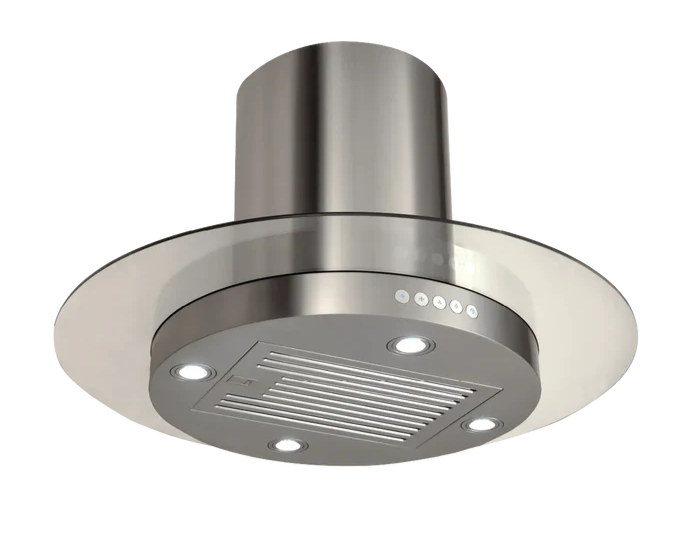
Under-cabinet models are designed to work beneath existing cabinetry, while wall-mounted hoods are installed against the wall above the cooking area. Island models are intended for cooktops positioned away from the wall, and insert models can be incorporated into a custom enclosure.
Match the Hood Width to the Cooking Surface
Range hoods for kitchens are another important consideration because the hood needs to suit the size and configuration of the cooking area. The collection includes options from approximately 24 inches through 72 inches, with 30-, 36-, 42-, 48-, and 60-inch options particularly well represented.
A properly sized hood can provide more effective coverage over the cooking surface. The exact dimensions should also account for surrounding cabinets, the available wall or ceiling space, and the manufacturer’s installation requirements.
Measuring the intended installation area before selecting a model can prevent problems involving cabinet clearance, duct placement, and overall fit.
Understand CFM Before Selecting a Hood
CFM, or cubic feet per minute, indicates the volume of air a range hood is designed to move. It is one of the specifications that can help distinguish between different ventilation systems.
The appropriate airflow capacity depends on factors such as the cooking appliance, cooking habits, installation design, and local requirements. A higher CFM rating is not automatically the best choice for every kitchen because the ventilation system must also be appropriately ducted and installed.
Compare Ducted and Recirculating Options
Ventilation method is another important distinction. Ducted systems move captured air outside through ductwork, while recirculating systems filter air and return it to the kitchen.
The supplied collection includes both ductless/recirculating and ducted applications.
A ducted hood requires suitable duct routing, so installation conditions should be considered before choosing the appliance. In kitchens where exterior ducting is difficult or restricted, a compatible recirculating configuration may provide an alternative, provided the selected model supports that installation method.
Consider the Hood’s Mounting Style
Mounting style affects both installation and appearance. Wall-mounted hoods can become a prominent design element above a range, while island hoods are positioned over centrally located cooking surfaces.
Insert hoods offer another approach. They are installed within a custom enclosure, allowing cabinetry or a surrounding hood structure to define the visible design. The collection includes insert models with different widths and airflow specifications, including Proline options with 600 CFM and models reaching up to 1,200 CFM.
Considering the mounting style early can make it easier to coordinate the hood with the rest of the kitchen.
Evaluate Materials and Finishes
Luxury range hoods for kitchens can also influence the visual character of the kitchen. Stainless steel remains widely used, but contemporary collections include several other finishes and accent combinations. This range of finishes allows homeowners to coordinate the hood with cabinetry, hardware, appliances, and other kitchen design elements.
Look at Lighting and Controls
Convenience features can affect how practical a range hood feels during everyday cooking. Depending on the model, features can include integrated lighting, different fan-speed settings, electronic controls, remote controls, or other operating options.
For example, the collection includes a Proline professional wall-mounted model listed with LED lighting and 1,800 CFM.
When comparing models, it is useful to review the complete product specifications rather than assuming every hood within the same category includes identical controls or features.
Balance Ventilation With Kitchen Design
A hood needs to perform its ventilation role while fitting naturally into the surrounding space. A large professional-style hood may suit a substantial cooking area, while a concealed insert may be more appropriate for a kitchen where cabinetry is intended to remain the visual focus.
The collection includes professional, wall-mounted, island, under-cabinet, and insert configurations, providing different approaches to balancing ventilation and design.
Thinking about the kitchen as a complete system can make the selection process easier. The range, available ductwork, cabinetry, ceiling height, and hood dimensions all need to work together.
Conclusion
Selecting a range hood requires attention to more than appearance. Kitchen layout, mounting style, hood width, airflow capacity, ventilation method, installation requirements, finish, and available features can all influence the final choice. The Smart Home Luxury collection brings these different options together for comparison. The wide selection demonstrates how different configurations can address distinct design and ventilation needs. Reviewing individual specifications and installation requirements before purchasing can help homeowners select a model that fits their cooking area and complements the overall kitchen design.