
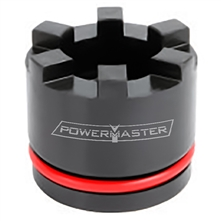
More Than Just a Socket: The Small Tool That Makes Heavy Work Safer
A single wrong tool can turn a simple maintenance task into a serious safety risk. High-torque jobs demand equipment that can handle repeated impact without breaking. That is why choosing the right socket is never a small decision. Whether industrial teams source tools from trusted impact socket suppliers or work directly with an experienced impact socket manufacturer, selecting the correct impact socket helps improve safety, reliability, and day-to-day performance. Built for demanding applications, impact sockets are designed to work with powerful impact wrenches and perform where ordinary sockets cannot.
What Is an Impact Socket and Why Does It Matter?
An impact socket is not the same as a regular hand tool socket. At first glance, both may look similar, but they are built for completely different jobs.
A standard socket is designed for hand tools where force is applied smoothly and steadily. An impact wrench works in another way. It delivers fast and repeated bursts of high torque. This creates sudden shock loads that ordinary sockets are not built to handle.
Using a standard socket with an impact wrench can become dangerous. Since it is not designed for repeated impact , it may crack or even shatter. Broken metal pieces can fly away at high speed and create a serious safety hazard for anyone nearby.
An impact socket is specially designed to prevent this problem . It absorbs the repeated force from the impact wrench and transfers the torque safely to the fastener.
Some of the features that make an impact socket different include:
- Manufactured from chrome-molybdenum (Cr-Mo) steel
- Heat treated to improve strength and absorb repeated shock
- Thick wall construction for better durability
- Black oxide finish that helps resist rust in workshop conditions
- Designed to transfer high torque without distortion or brittle failure
These features allow the socket to work under demanding industrial conditions where regular sockets may fail.
Why Material Makes Such a Big Difference
The material used in an impact socket plays a major role in its performance. Chrome-molybdenum steel, commonly known as Cr-Mo steel , is selected because it can absorb repeated impact without becoming brittle. This allows the socket to remain strong even during heavy duty applications.
On the other hand, sockets made from chrome-vanadium steel are suitable for hand tools but are not intended for continuous impact wrench use.
For this reason, experienced maintenance teams often purchase tools from reliable impact socket suppliers that provide proper material specifications instead of choosing products based only on price.
Built for Strength Without Losing Accessibility
A good impact socket is not simply made thicker. Its wall thickness is carefully designed to provide strength while still allowing access to fasteners placed in restricted areas.
Other design details also improve usability:
- Deep hex openings fit standard fastener heads properly.
- Chamfered openings make engagement easier.
- Concentric openings meet industrial specifications.
- Ring-N-Pin arrangement helps secure the socket firmly to the drive.
Each feature may seem small on its own, but together they help make daily maintenance work smoother and safer.
Why the Black Finish Matters
Many people identify an impact socket by its black colour. This black oxide finish is not only for appearance. It also helps protect the socket against rust in workshop and industrial environments .
Unlike chrome-plated hand sockets , the black oxide coating is suitable for impact applications while providing added resistance against corrosion.
Impact Sockets in Industrial Maintenance: Where Are They Commonly Used?
Industrial maintenance involves equipment that operates under heavy loads every day. Fasteners become tight, exposed to vibration, pressure, and continuous operation . Removing or tightening them requires powerful impact tools along with sockets that are designed for such conditions.
Impact sockets are used across many maintenance activities because they are built to handle repeated high-torque applications safely.
Heat Exchanger Maintenance
Heat exchangers contain several large fasteners that often require high torque during maintenance.
Impact sockets are commonly used for:
- Flange bolting
- De-bolting operations
- Channel head removal
- Bonnet fasteners
These jobs demand tools capable of handling repeated impact without damage.
Pipeline Maintenance
Pipelines include numerous flange connections across different pipe sizes and pressure ratings.
During inspection, repair, or maintenance work , impact sockets help technicians tighten and remove flange bolts efficiently while working with impact wrenches.
Their strong construction allows them to withstand repeated use throughout maintenance operations.
Pump and Compressor Servicing
Pumps and compressors contain several heavy-duty fastening points that require reliable tools.
Impact sockets are commonly used on:
- Coupling bolts
- Bearing housing fasteners
- Casing bolts
Since these fasteners are often tightened with significant force, using an impact-rated socket becomes an important part of safe servicing.
Structural and Civil Maintenance
Large steel structures depend on strong mechanical connections.
Maintenance work often includes:
- Structural steel connections
- Anchor bolt installation
These applications require sockets that can transfer impact force effectively without becoming damaged during repeated use.
Heavy Equipment Servicing
Heavy machines work under demanding conditions every day.
Maintenance teams servicing equipment such as:
- Earthmoving machinery
- Cranes
- Material handling equipment
frequently rely on impact sockets for removing and tightening large fasteners.
The repeated torque generated by impact wrenches makes impact-rated sockets an essential part of these servicing tasks.
Pressure Vessel and Reactor Maintenance
Pressure vessels and reactors use large diameter studs and nuts that require high tightening torque. Impact sockets provide the strength needed for these demanding applications while helping technicians work efficiently with impact tools .
Because these maintenance jobs often involve critical equipment, selecting properly manufactured sockets becomes even more important.
Small Tool, Big Responsibility
Although an impact socket appears to be a simple workshop tool, its role is much larger than many realise.
Every maintenance task depends on reliable torque transfer. When the socket is designed for repeated impact, it supports both efficiency and workplace safety. Using the correct tool also reduces the chances of equipment damage caused by unsuitable sockets.
This is one reason industries continue to depend on trusted manufacturers and quality-tested products instead of compromising on essential maintenance tools.
Conclusion
Industrial maintenance leaves very little room for compromise. Every fastening job depends on tools that can withstand repeated impact while delivering consistent performance. That is why selecting products from trusted impact socket suppliers and an experienced impact socket manufacturer becomes an important part of workplace safety and maintenance efficiency.
POWERMASTER Impact Sockets combine high-strength alloy steel, heat-treated construction, optimum wall thickness, black oxide protection, and the advanced Freecorner profile to meet demanding industrial requirements. From heat exchanger maintenance to heavy equipment servicing, they are built to perform where ordinary sockets cannot.
Choosing the right impact socket is more than buying another workshop tool . It is an investment in safer operations, dependable performance, and confidence every time an impact wrench is put to work.