
Innovative Packaging Ideas to Make Your Candle Boxes Stand Out
A friend of mine runs a small candle shop out of a converted garage space, and she told me something a while back that stuck with me. She said she can tell within about two seconds of a customer walking in which candles they’ll pick up, just by watching where their hands go first. Not their eyes their hands. People reach for the box that looks like it’ll feel interesting before they even know what’s inside it.
That’s really the whole problem with most candle packaging right now. It’s designed to be looked at, not touched. Cream box, black label, gold foil accent near the top you’ve seen it a thousand times, I’ve seen it a thousand times, and none of it makes anyone’s hand move toward the shelf first.
The Shelf Has Gotten Too Polished, Honestly
There was a time when clean printing and a nice color palette was enough to look premium. That window’s mostly closed now. Print quality that used to cost extra is basically the baseline everywhere, even for candles selling at ten dollars. Which means “looks nice” doesn’t do much anymore it just makes you look like everyone else who also invested in decent printing.
What actually pulls attention now tends to be something structural. A shape, a texture, a way the box opens that isn’t the standard flip-top lid everyone defaults to.
A Few Directions Worth Exploring
I won’t pretend every idea here fits every budget. Some are cheap tweaks; some require real investment. Worth knowing which is which before you fall in love with something you can’t afford yet.
Magnetic closures are probably the easiest upgrade to notice immediately. There’s something about that little click when the lid shuts that people respond to almost instinctively it signals quality without you having to say the word “premium” anywhere on the box.
Interior printing is underrated. Most brands spend all their design budget on the outside and leave the inside of the lid blank. A hidden pattern, a short phrase, even just a different color inside than outside it rewards someone for actually opening the box slowly instead of ripping through it. Small thing, but people notice small things more than brands expect.
Then there’s shape. A hexagonal or slightly angled box just photographs differently than a standard rectangle, and given how much candle shopping happens through a phone screen these days, that matters more than it used to.
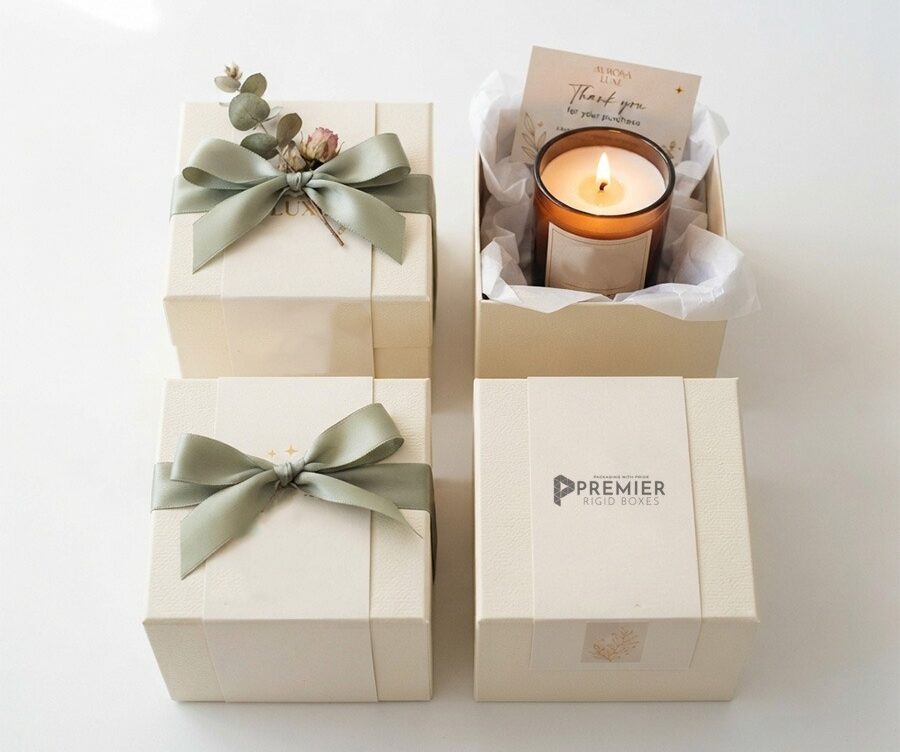
Rigid candle boxes deserve their own mention here, because a lot of what makes these ideas actually work depends on the box being sturdy enough to support them. A magnetic hinge on flimsy paperboard wears out fast. Deep embossing doesn’t hold cleanly on thin material. Rigid board has the weight and structural integrity to carry off the more ambitious ideas without falling apart after a few uses which matters if you want the box kept and reused, not tossed the day the candle runs out.
Texture is worth its own paragraph too, honestly. A soft-touch matte laminate feels different under a thumb than standard matte coating, and that’s a difference print alone just cannot replicate no matter how good the design is. Embossed botanical patterns, a linen-style texture, even deliberately uncoated Kraft stock that feels a little rough all of it does work that flat printing simply can’t.
What Material You’re Working with Changes What’s Possible
None of the ideas above mean much if the base board can’t physically support them.
| Material Type | Best For | Durability | Cost Level | Typical Use Case |
| Rigid Board | Premium gift and retail candles | Very High | High | Boutique and luxury lines |
| SBS Paperboard | Standard retail packaging | Moderate | Medium | Everyday shelf stock |
| Textured Matte Board | Boutique or specialty candles | Moderate | Medium-High | Gift shops, subscription boxes |
| Kraft Corrugated | Natural or handmade candle lines | High | Medium | Farmers markets, eco-conscious brands |
| Double-Wall Board | Heavier multi-candle sets | Very High | High | Bundled or gift-set packaging |
If I had to pick one takeaway from this table, it’s that rigid board unlocks most of the ambitious stuff — nesting structures, deep embossing, hinges that hold up after dozens of opens. It costs more, but it’s usually the thing standing between “cool idea” and “cool idea that actually survives contact with a customer.”
You Don’t Need a Big Budget for Everything
Not every good idea costs much. A tiny die-cut window that shows the wick color costs almost nothing and gives buyers a little preview before they commit. A short line in a handwritten-style font describing where the scent idea came from a place, a memory, whatever adds personality that a plain ingredient list never will. Even just picking an unusual box color, something like a deep rust instead of yet another cream box, can be the entire reason someone’s eye lands on your product before the five others next to it.
Where This Goes Wrong
Piling on too many premium touches until the box costs nearly as much as the candle itself, which quietly wrecks margins nobody’s tracking closely enough. Getting attached to a clever fold or opening mechanism that looks great in a design meeting but genuinely frustrates a customer trying to open it one-handed at a checkout counter. And probably the most common failure a gorgeous box that doesn’t actually protect the candle, so it arrives cracked or leaning, and all that design work gets undone in about four seconds of disappointment.
Sustainable Doesn’t Mean Cheap-Looking Anymore
People used to assume eco-friendly packaging meant giving up the premium feel. That’s outdated at this point. Textured Kraft, soy-based ink, FSC-certified rigid board all of it can look genuinely upscale while still being recyclable or biodegradable. A lot of the texture-driven ideas mentioned earlier actually lean naturally toward a sustainable look anyway, without needing a plastic window or heavy glossy coating that fights against the eco-friendly story a brand’s trying to tell.
Final Thoughts
The candle is only half of what someone’s buying. The box is what they touch first, what they photograph for a gift post, what sometimes sits on a shelf long after the wax is gone. Treat it like an afterthought and it blends into the same row of boxes everyone else is stuck competing in. Treat it like part of the actual product worth a real investment in material or one unexpected detail and it tends to be the reason someone remembers the brand at all.
Frequently Asked Questions
Is it worth paying more for rigid candle boxes on a small budget?
For a flagship product or anything meant as a gift, usually yes. The weight alone changes how premium something feels in someone’s hands, which often justifies the higher price point on its own.
What’s a cheap way to make a candle box feel less generic?
Small touches go further than people expect a die-cut window showing the wick, an unusual color choice, a short handwritten-style line about the scent’s inspiration. None of that requires a full redesign.
Does printing inside the lid actually matter to customers?
It tends to leave a real impression. It rewards someone for opening the box slowly rather than tearing it open, and it’s the kind of detail people bring up later when they’re talking about a brand to someone else.
Can eco-friendly candle packaging still feel premium?
Yes, and increasingly it’s expected to. Textured kraft, embossing, and certified rigid board can all read as upscale while remaining recyclable, so sustainability doesn’t have to come at the cost of a cheaper look.
What’s the most common mistake brands make trying to stand out?
Chasing a clever structural idea while forgetting the box’s basic job protecting the candle. A beautiful box with a broken candle inside does more damage than a plain box that just works.