
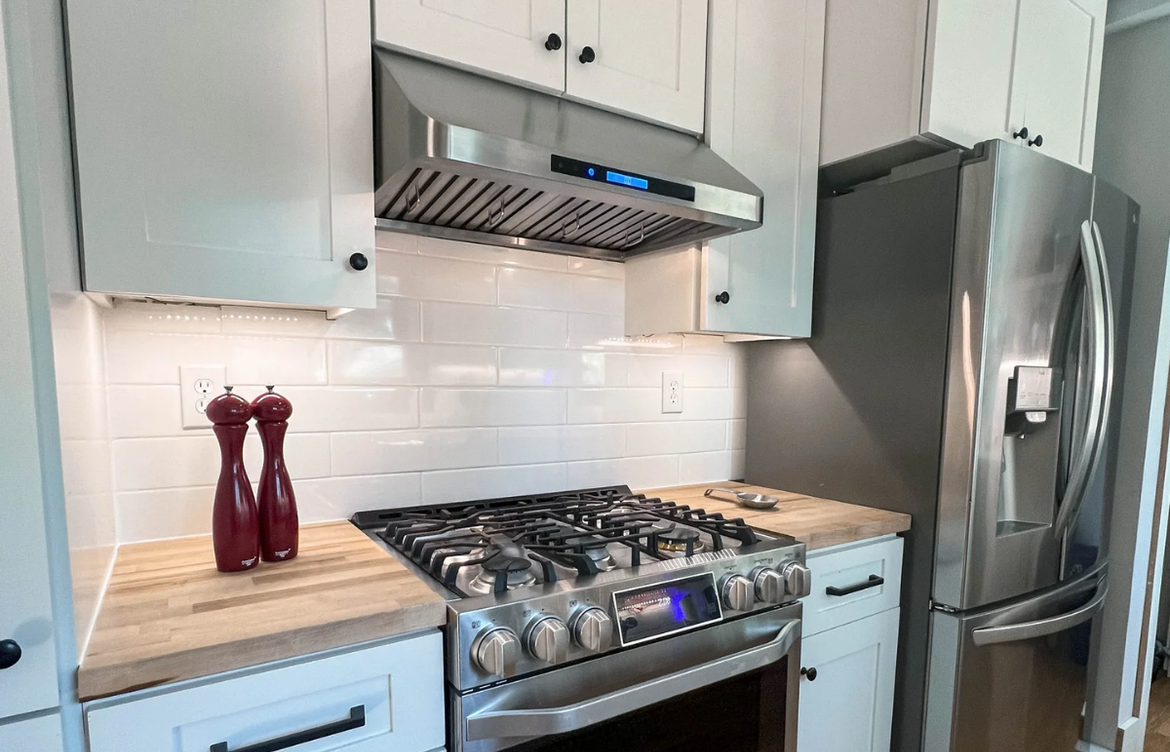
How to Choose the Best Under Cabinet Kitchen Range Hood
Kitchen ventilation plays an important role in maintaining indoor air quality, controlling cooking odors, and reducing grease accumulation. Whether preparing everyday meals or cooking at high temperatures, proper ventilation helps create a more comfortable kitchen environment. However, choosing the right range hood involves more than finding an appliance that fits above the stove.
An under cabinet kitchen range hood offers a practical ventilation solution for kitchens with cabinetry installed directly above the cooking area. Its compact design helps preserve valuable kitchen space while capturing airborne grease, steam, and cooking fumes.
Understanding ventilation capacity, installation requirements, filtration systems, and noise levels can help homeowners select a range hood suited to their kitchen layout and cooking habits.
What Is an Under Cabinet Kitchen Range Hood?
An under cabinet kitchen range hood is a ventilation appliance installed beneath an overhead kitchen cabinet, directly above a cooking surface. Unlike wall-mounted chimney hoods or island range hoods, this design integrates with existing cabinetry.
The primary function of a range hood is to capture cooking emissions before they spread throughout the kitchen. Depending on its ventilation configuration, the appliance either exhausts contaminated air outdoors or filters and recirculates it indoors.
Under-cabinet range hoods are commonly used in compact kitchens, apartments, and homes where maintaining overhead cabinet storage is important.
Their effectiveness depends on several factors, including the hood’s capture area, airflow capacity, installation height, and ductwork configuration.
What Size Under Cabinet Range Hood Do You Need?
Selecting the correct hood size is essential for effective ventilation.
Range hoods are commonly available in widths such as 24, 30, 36, and 42 inches, although larger sizes are also available.
For many residential kitchens, a 30-inch hood is suitable for a standard 30-inch cooking range. However, the ideal dimensions depend on the cooktop layout and available installation space.
Consider these factors when determining the appropriate size:
- Cooktop width: The hood should generally be at least as wide as the cooking surface.
- Cabinet dimensions: Measure the available width, depth, and height beneath the cabinets.
- Cooking intensity: Frequent high-temperature cooking may benefit from a larger capture area.
- Manufacturer guidelines: Follow the recommended installation height and clearance requirements.
A wider hood can help capture emissions escaping from the outer burners, particularly when frying, grilling, or using multiple burners simultaneously.
How Much CFM Is Best for an Under Cabinet Range Hood?
CFM, or cubic feet per minute, measures the volume of air a ventilation fan can move.
Choosing the appropriate CFM rating is an important step when evaluating an under cabinet kitchen range hood.
A range hood with insufficient airflow may struggle to remove cooking fumes effectively. However, selecting the highest available CFM rating does not automatically guarantee better ventilation.
Actual performance also depends on hood geometry, duct resistance, installation quality, and how effectively cooking emissions enter the hood.
For residential kitchens, ventilation requirements vary according to the cooking appliance, fuel type, cooking habits, and applicable building codes.
Higher-capacity systems may be useful for frequent wok cooking, searing, or other activities that generate substantial smoke. Nevertheless, powerful ventilation systems can also require additional replacement air.
In some jurisdictions, exhaust systems exceeding 400 CFM trigger specific makeup-air requirements. Homeowners should check local building codes before selecting high-capacity equipment.
Ducted vs. Ductless Range Hoods: Which Is Better?
An important consideration when choosing an under cabinet kitchen range hood is whether to use ducted or ductless ventilation.
Ducted Range Hoods
Ducted systems transport cooking emissions through ventilation ducts and release them outside the building.
They help remove moisture, combustion pollutants, airborne particles, and cooking odors from the indoor environment.
According to ENERGY STAR, properly vented kitchen range hoods can reduce indoor particulate concentrations associated with cooking.
Ductless Range Hoods
Ductless systems draw cooking air through grease filters and, typically, activated carbon filters before returning it to the kitchen.
These systems may be suitable where installing exterior ductwork is impractical.
However, recirculating ventilation does not remove moisture or combustion gases outdoors. Carbon filters also require periodic replacement to maintain odor-control effectiveness.
When exterior venting is possible, ducted ventilation generally provides a more comprehensive solution for managing cooking-related indoor pollutants.
What Features Should You Look for in a Range Hood?
Beyond airflow capacity, several practical features influence the everyday performance of a kitchen ventilation system.
Adjustable Fan Speeds
Multiple fan speeds allow users to adjust ventilation according to cooking intensity. Lower speeds may be sufficient for simmering, while frying or searing often requires greater airflow.
Effective Grease Filters
Metal mesh and baffle filters capture airborne grease before it enters the ventilation system. Removable filters simplify routine maintenance, although cleaning requirements vary by manufacturer.
Integrated Lighting
Built-in LED lighting improves visibility across the cooking surface, particularly in kitchens with limited overhead lighting.
Noise Levels
Range hood noise is commonly measured in sones. Lower ratings generally indicate quieter operation, but comparisons should use noise measurements taken at equivalent operating conditions.
Accessible Controls
Push-button, touch-sensitive, and digital controls offer different usability advantages. Accessible controls make it easier to adjust airflow while cooking.
What Should You Check Before Installing a Range Hood?
Proper installation is essential for achieving the expected performance of an under cabinet kitchen range hood.
Before installation, homeowners should confirm that the existing cabinet structure can accommodate the appliance’s dimensions and weight.
Ducted models also require attention to duct diameter, routing, and exterior termination.
Excessive bends, long duct runs, and undersized ductwork can restrict airflow and increase noise.
Electrical connections must follow manufacturer instructions and applicable safety regulations.
Another important consideration is mounting height. Installing a hood too high can reduce its ability to capture cooking emissions, while placing it too low may create clearance or heat-related concerns.
Always follow the ventilation manufacturer’s specified mounting distances and the cooking appliance’s clearance requirements.
How Do You Maintain an Under Cabinet Range Hood?
Routine maintenance helps maintain airflow and reduces grease accumulation.
Homeowners should regularly inspect the filters, remove accumulated grease, and clean accessible exterior surfaces using appropriate cleaning products.
Metal grease filters may be washable, depending on their construction and manufacturer instructions. Disposable charcoal filters generally require replacement rather than washing.
It is also important to inspect ventilation openings for obstructions and monitor changes in fan noise or airflow.
A well-maintained under cabinet kitchen range hood is more likely to deliver consistent ventilation performance over time.
Conclusion
Choosing the right kitchen ventilation system requires careful consideration of airflow capacity, installation space, filtration, and everyday cooking requirements. An appropriately sized hood can help control cooking emissions while maintaining a practical kitchen layout. When researching ventilation appliances, homeowners may encounter comparisons such as Proline PLFW 520.30 vs. 30” Whirlpool WVW53UC0FS Under Cabinet Range Hood. Both referenced models are actually wall-mounted canopy hoods, making installation style an essential consideration before comparing their performance. Ultimately, selecting an under cabinet kitchen range hood should involve evaluating actual kitchen conditions rather than relying on airflow ratings alone. The right combination of capture coverage, ventilation design, suitable installation, and routine maintenance can support cleaner air and a more comfortable cooking environment.