
How a 1/2 HP Pond Fountain Improves Water Flow and Pond Health
Ponds can add visual interest to residential landscapes, recreational properties, and shared outdoor spaces, but maintaining healthy water conditions requires more than simply having water in the landscape. Circulation, oxygen exchange, water depth, surface area, and debris levels can all influence pond conditions. A properly selected 1/2 hp pond fountain can help address some of these needs by moving water through the surface and creating greater interaction between water and air. Understanding how these systems work makes it easier to determine when this type of fountain is appropriate and what factors should be considered before installation.
How Pond Fountains Circulate Water
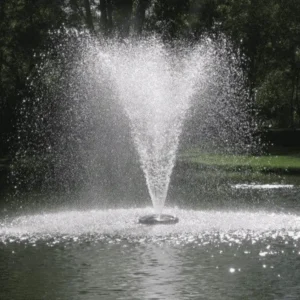
A 1/2 hp pond fountain generally uses a submerged pump to draw water from the pond and push it upward through a nozzle. The water is then dispersed into the air before falling back into the pond. This movement increases surface agitation and exposes more water to the atmosphere.
The process supports gas exchange while also creating circulation near the upper portion of the water column. According to the University of Florida’s IFAS Extension, fountains increase interaction between pond water and the atmosphere, which can increase oxygen in the water. They are generally more suitable for shallower ponds, while bottom-diffused aeration can be more effective in deeper water.
Circulation can also help limit stagnant areas where water remains relatively undisturbed. However, a fountain should not be considered a complete water-management system. Pond depth, nutrient levels, biological activity, vegetation, and filtration can all affect water quality.
What Does 1/2 HP Mean?
Horsepower describes the motor’s power rating, but it does not tell the entire story about fountain performance. Flow rate, nozzle design, head pressure, pond dimensions, and the intended spray pattern also influence how a fountain operates.
The current 1/2 hp pond fountain collection lists systems using pumps rated at up to 5,300 gallons per hour, with standard 120V operation. The collection includes both unlighted and lighted configurations, with the latter incorporating three LED lights.
This is why pond owners should compare complete specifications rather than choosing a fountain solely because of its horsepower. A fountain that is correctly matched to the pond can provide more useful circulation and a more suitable display than a system selected by motor rating alone.
Benefits of Water Movement
One of the main functional advantages of a fountain is continuous water movement. When water is circulated and exposed to air, oxygen exchange can increase. Dissolved oxygen is important for aquatic organisms and for aerobic microorganisms involved in breaking down organic matter.
Movement may also help reduce conditions associated with stagnant water. However, fountains do not directly eliminate algae or solve every water-quality problem. Nutrient availability, sunlight, temperature, and biological conditions remain important factors in algae development.
A fountain can therefore be viewed as one component of broader pond management rather than a replacement for appropriate maintenance practices.
Choosing the Right Fountain Size
Pond size is an important consideration when selecting a fountain, but surface area alone is not enough. Depth and the purpose of the installation should also be evaluated.
A fountain intended primarily for visual display may have different performance requirements from one selected mainly for aeration. Irregularly shaped ponds can also contain areas that a single fountain does not circulate effectively.
For deeper ponds, surface fountains may have limitations because their circulation primarily affects upper water layers. Extension guidance from the University of Florida notes that fountains are generally suited to shallower ponds, while diffused aeration systems can be more effective when oxygen needs extend into deeper water.
Fountain Nozzles and Spray Patterns
The nozzle plays an important role in determining how a fountain looks and how water is distributed. Different nozzle configurations can produce variations in spray height, width, and shape.
The current 1/2 HP collection includes five interchangeable nozzles with its listed systems, allowing the spray appearance to be adjusted.
When choosing a nozzle, consider the pond’s dimensions and surrounding landscape. A spray that is too wide may send water outside the pond, while an undersized pattern may not create the intended visual effect.
Adding Illumination to a Pond Fountain
Lighting changes how a fountain appears after sunset and can make moving water visible from greater distances. Lighted fountain systems commonly use LED fixtures because LEDs can provide illumination with relatively low power consumption and long operating life.
The lighted 1/2 HP models listed in the referenced collection use three 12V, 6-watt LED lights and offer white or color-changing options.
Maintenance and Electrical Considerations
Routine maintenance helps preserve fountain performance. Pumps and nozzles should be checked for leaves, algae, sediment, and other debris that could restrict water movement. Maintaining an appropriate water level is also important because inadequate water levels can affect pump operation.
Electrical planning deserves particular attention because fountain equipment operates in and around water. The electrical system, connections, controls, and protective devices should be appropriate for outdoor wet-location use and installed according to applicable electrical requirements.
Regular inspection is especially important after severe weather, when debris or changes in water level may affect the equipment.
Conclusion
A pond fountain can combine water circulation, aeration, and visual movement in one system, but its effectiveness depends on selecting equipment that matches the pond’s size, depth, purpose, and operating conditions. By considering these factors together, pond owners can make a more informed decision about fountain design, circulation needs, and outdoor fountain lighting. Horsepower should be considered alongside flow rate, nozzle design, and installation requirements rather than treated as the only measure of performance. Lighting can further extend the visual impact of a fountain into the evening, while routine cleaning and electrical safety help support reliable operation.