
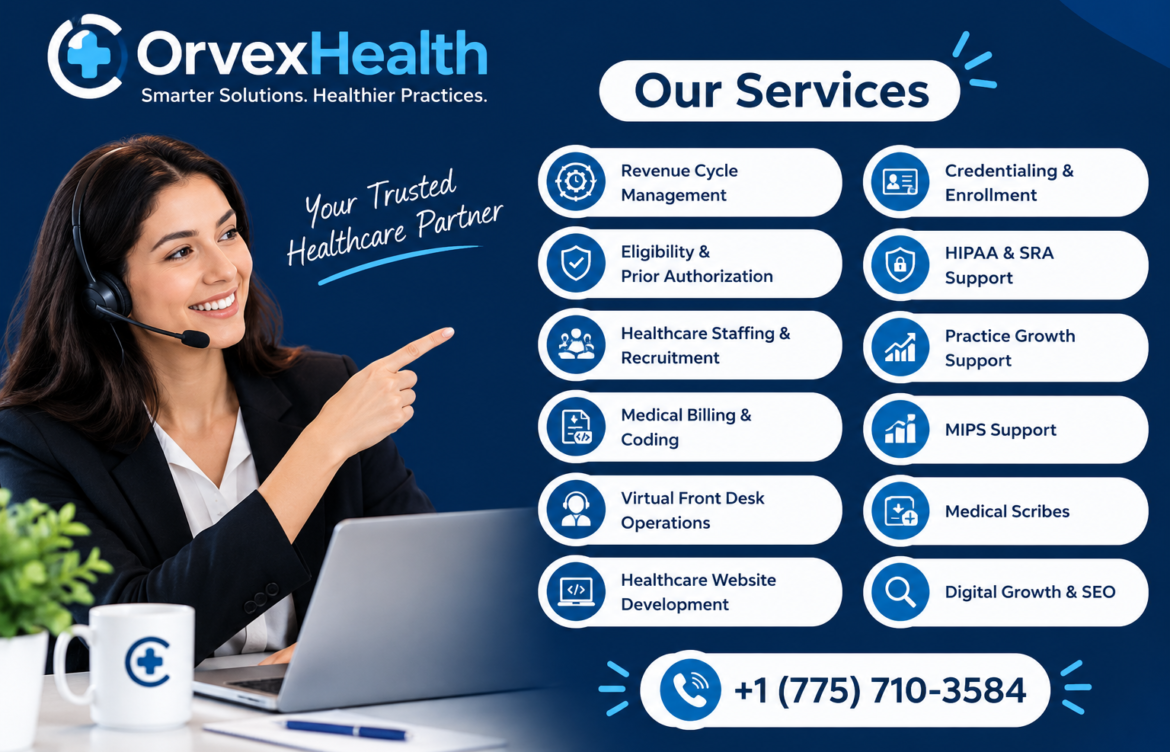
Best Medical Billing Services for Healthcare Providers Accurate & Reliable
Running a healthcare practice today means juggling patient care, staff management, compliance rules, and perhaps the most frustrating piece of the puzzle getting paid on time. Insurance companies deny claims, coding rules shift constantly, and even a small billing error can delay revenue for weeks. This is exactly why more clinics, hospitals, and private practices are turning to the best medical billing services to keep their revenue cycle healthy and their staff focused on what actually matters: patients.
In this article, we’ll break down what makes the best medical billing services stand out from the rest, why accuracy and reliability aren’t optional, and how the right billing partner can transform your practice’s financial health.
Why Your Revenue Cycle Deserves a Bodyguard, Not Just a Bookkeeper
Most healthcare providers think of billing as a back-office task something to hand off and forget about. That mindset is costing practices thousands of dollars every month. A weak billing process doesn’t just lose money on denied claims; it quietly bleeds revenue through underpayments, missed timely-filing deadlines, and outdated fee schedules nobody bothered to update.
Think of the best medical billing services less like a bookkeeper and more like a bodyguard for your revenue. It actively defends every dollar you’ve earned, catches errors before claims are submitted, follows up relentlessly on unpaid claims, and appeals denials instead of writing them off. The difference between a passive billing team and an aggressive, accuracy-driven one can mean a 10–20% swing in monthly collections. That’s not a minor detail that’s the difference between a struggling practice and a thriving one.
The Five Non-Negotiables of a Truly Reliable Billing Partner
Not all medical billing companies are created equal, and separating the best medical billing services from average ones comes down to a few key factors. Before you outsource your revenue cycle, look for these five essentials:
1. Certified Coding Expertise Accurate CPT, ICD-10, and HCPCS coding is the foundation of clean claims. A reliable billing service employs certified coders who understand specialty-specific nuances because billing for a cardiologist looks nothing like billing for a dermatologist.
2. Real-Time Claim Scrubbing The best services use advanced software to scrub claims for errors before submission, catching mismatched codes, missing modifiers, and eligibility issues that would otherwise trigger a denial.
3. Aggressive Denial Management Denials aren’t the end of the story — they’re the beginning of a fight. Top billing partners track denial reasons, correct them fast, and resubmit or appeal within tight windows so revenue doesn’t slip through the cracks.
4. Transparent Reporting You should never have to wonder where your money is. Reliable billing services provide detailed dashboards showing collections, denial rates, days in accounts receivable, and payer performance in real time.
5. HIPAA-Compliant Security Patient data is sacred. Any billing partner handling your claims must follow strict HIPAA protocols, encrypted data transfers, and secure storage practices without exception.
How Accuracy Turns Into Actual Dollars in Your Bank Account
Here’s a number that should grab your attention: industry data consistently shows that practices lose between 5% and 10% of potential revenue due to billing errors, missed charges, and unworked denials. For a mid-sized practice billing $100,000 a month, that’s up to $10,000 disappearing every single month.
Accurate billing isn’t just about avoiding mistakes; it’s about capturing every dollar you’re entitled to. This includes:
- Correct use of modifiers to reflect the true complexity of a visit
- Proper documentation-to-code matching to avoid under-coding
- Timely charge entry so claims go out within 24–48 hours of service
- Verification of patient eligibility before the appointment, not after
When these processes run like clockwork, practices routinely see first-pass claim acceptance rates above 95%, compared to the industry average that often hovers closer to 85%. That gap represents real, collectible revenue that many practices simply leave on the table — which is exactly the kind of result the best medical billing services are built to deliver.
Why Outsourcing Beats an Overworked In-House Team
Many providers hesitate to outsource, assuming an in-house biller gives them more control. In reality, most in-house billing staff are stretched thin, juggling scheduling, patient calls, and billing all at once a recipe for burnout and mistakes.
A dedicated medical billing service brings:
- Specialized staff who do nothing but billing, all day, every day
- Scalability that grows with your patient volume without hiring headaches
- Lower overhead, since you’re not paying salary, benefits, and software licenses for an internal team
- Continuity, so a single employee’s sick day or resignation doesn’t stall your entire revenue cycle
For small to mid-sized practices especially, outsourcing to the best medical billing services often costs less than maintaining an in-house billing department while delivering measurably better collection rates.
What to Ask Before You Sign With Any Billing Company
Not every billing service will be the right fit. Before committing, ask potential partners:
- What is your average first-pass claim acceptance rate?
- How do you handle denied claims, and what’s your average turnaround time?
- Can you provide references from practices in my specialty?
- What reporting tools do I get access to, and how often?
- Are your coders certified (CPC, CCS, or equivalent)?
- What are your fees flat rate, percentage of collections, or hybrid?
A confident, established billing partner will answer these questions clearly and back them up with real performance data, not vague promises a hallmark of the best medical billing services in the industry.
Frequently Asked Questions
1. How much do the best medical billing services typically cost?
Most billing companies charge between 4% and 9% of monthly collections, though some offer flat-fee pricing depending on practice size and claim volume. Rates often vary by specialty and the complexity of billing involved.
2. Will outsourcing my billing mean losing control over my revenue cycle?
No. Reputable billing services provide real-time dashboards and detailed reporting, so you can monitor claims, collections, and denial trends at any time often with more visibility than an overwhelmed in-house team could offer.
3. How long does it take to switch to a new medical billing company?
A typical transition takes two to four weeks, including data migration, credentialing verification, and staff training. Many services run parallel with your current process briefly to avoid any disruption in cash flow.
4. Can a billing service work with my existing EHR or practice management software?
Most established billing companies integrate with popular EHR and PM systems such as Epic, Athenahealth, and Kareo. Always confirm compatibility with your specific software before signing a contract.
5. What happens to old, unpaid claims when I switch billing services?
A reliable partner will conduct an accounts receivable audit and continue working prior unpaid or denied claims alongside new ones, ensuring no revenue from before the transition gets left behind.