
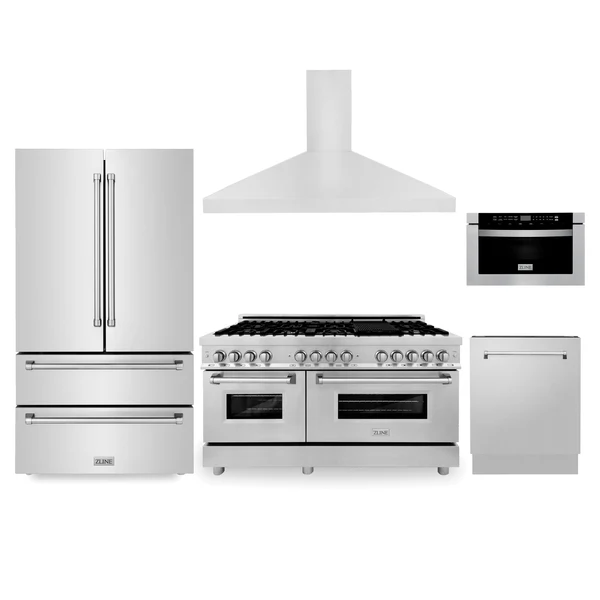
Appliance Combo Packages: Are They Worth It for Your Kitchen?
Planning a kitchen renovation involves numerous decisions, from cabinetry and countertops to lighting, plumbing, and appliances. Choosing each appliance separately can make the process more complicated, particularly when homeowners want consistent dimensions, finishes, and functionality.
Appliance combo packages group multiple kitchen appliances together, allowing consumers to consider several essential products as a coordinated collection. Depending on the package, this can include combinations of refrigerators, ranges, dishwashers, microwaves, cooktops, wall ovens, or ventilation equipment.
Buying appliances together does not necessarily mean every product will suit every kitchen. Individual specifications, installation requirements, capacity, energy use, and features still need to be assessed before making a decision.
Why Do Homeowners Choose Appliance Packages?
One reason consumers consider appliance packages is convenience. Researching several appliances individually can take considerable time, particularly when a kitchen requires a refrigerator, range, dishwasher, and microwave at the same time.
A package provides a starting point for comparing compatible products. Coordinated appliances can also create a more consistent appearance, especially when they share finishes, handles, controls, and design details.
Packages can be particularly useful during new construction or complete renovations because multiple appliances need to be planned simultaneously.
However, convenience should not replace careful evaluation. A package is worthwhile only when the included appliances meet the household’s requirements.
What Appliances Are Commonly Included?
The exact contents of an appliance package vary. Common combinations include:
- Refrigerator and range
- Range and dishwasher
- Refrigerator, range, and dishwasher
- Range, microwave, and dishwasher
- Cooktop and wall oven
- Refrigerator, range, dishwasher, and microwave
Some collections may offer several configurations so homeowners can select the combination most appropriate for their kitchen.
Before choosing a package, create a list of the appliances actually required. This prevents unnecessary purchases simply because an appliance is included in a discounted collection.
Can Appliance Packages Save Money?
One of the most common reasons consumers investigate packages is potential cost savings. A bundled purchase may sometimes provide a lower combined price than buying comparable appliances separately.
However, consumers should calculate the complete cost rather than assuming every package represents a bargain.
Consider:
- Appliance purchase price
- Delivery
- Installation
- Electrical modifications
- Plumbing changes
- Ventilation work
- Required accessories
- Removal of old appliances
- Warranty coverage
- Long-term operating costs
A package with a lower upfront price may not be the best financial choice if one included appliance has features that are unnecessary or if additional installation work is required.
How Important Is Appliance Compatibility?
Compatibility is one of the most important considerations when purchasing multiple appliances.
A refrigerator needs adequate cabinet and door clearance. A dishwasher requires appropriate water, drainage, and electrical connections. A range or cooktop may require gas or high-capacity electrical service, while cooking equipment also needs suitable ventilation.
When considering appliance combo packages, homeowners should verify the specifications of every individual appliance.
The kitchen should be measured before ordering. Nominal dimensions can differ from actual product dimensions, and installation clearances vary between models.
Do Matching Appliances Matter?
Matching appliances can create a more cohesive kitchen design. Similar finishes, handles, control panels, and proportions can make different products appear intentionally coordinated.
This can be particularly valuable in open-plan kitchens where appliances are visible from living and dining areas.
However, visual consistency is not the only consideration. A refrigerator should have the right capacity, a dishwasher should provide sufficient loading flexibility, and the cooking equipment should match the household’s preferred cooking methods.
Function should therefore guide selection, with aesthetics considered alongside it.
What Should You Know About Appliance Brands?
Consumers researching luxury appliance brands may encounter manufacturers that focus on premium construction, specialized cooking technology, refined design, or professional-style features.
Brand reputation can provide useful information, but it should not be the sole basis for a purchase. Different manufacturers may have different strengths, and product quality can vary across individual models.
Research warranty conditions, service availability, replacement parts, installation requirements, and user documentation before purchasing.
A well-known brand does not automatically make every appliance the right choice for a particular kitchen.
Are Premium Features Always Necessary?
Higher-priced appliance packages can include advanced features such as induction cooking, convection ovens, smart connectivity, sensor-based programs, flexible dishwasher racks, or sophisticated refrigerator storage systems.
These features can provide meaningful benefits when they match actual household needs.
For example, someone who regularly bakes may value precise oven temperature control and convection functionality. A household that frequently prepares large meals may prioritize refrigerator capacity and flexible dishwasher storage.
Conversely, a person who primarily prepares simple meals may gain little practical benefit from numerous specialized settings.
The goal should be to pay for useful functionality rather than features that will rarely be used.
How Should You Compare Refrigerators in a Package?
Refrigerator selection deserves careful attention because refrigerators vary significantly in capacity, configuration, and storage layout.
Consider:
- Total capacity
- Freezer capacity
- Door configuration
- Shelf adjustability
- Drawer arrangement
- Ice and water features
- Door clearance
- Depth
- Energy consumption
Counter-depth refrigerators can provide a more integrated appearance but may have less internal depth than conventional-depth models.
Door swing is also important. A refrigerator can fit within the available opening but still be difficult to use if adjacent cabinets prevent the doors from opening fully.
How Do You Choose the Right Cooking Appliance?
Cooking equipment should be selected according to cooking style and kitchen infrastructure.
Gas ranges offer direct flame control, while electric and induction systems use electrical heating technologies. Induction can provide rapid and precise heating but requires compatible cookware.
Oven capacity and configuration should also be considered. Frequent bakers may prefer convection capabilities, while people who prepare large meals may prioritize a spacious oven cavity.
Ventilation requirements should be confirmed before installation, especially for powerful cooking equipment.
What About Dishwashers?
Dishwasher capacity and rack design can significantly affect daily convenience. Households that frequently wash large cookware should look for adjustable racks and folding tines that provide greater loading flexibility.
Noise is another consideration, particularly in open-plan kitchens.
Energy and water consumption should also be reviewed. ENERGY STAR recommends comparing efficiency information and choosing a dishwasher size appropriate for household needs.
When a dishwasher is included in appliance combo packages, consumers should still compare its specifications against standalone alternatives.
Is a Package Deal on Appliances Always Better?
A package deal on appliances can be convenient, but it is not automatically the best option.
The key question is whether every appliance in the package provides appropriate capacity, performance, features, dimensions, and efficiency.
For example, a homeowner may find an attractive package containing four appliances but discover that the included refrigerator is too small or that the range lacks the preferred cooking technology.
Buying individual appliances may make more sense when specific requirements are highly specialized.
What Should You Check Before Ordering?
Before purchasing a package, create a complete measurement and installation checklist.
Verify:
- Width, height, and depth
- Door and drawer clearance
- Electrical requirements
- Gas requirements
- Water connections
- Drainage
- Ventilation
- Cabinet openings
- Delivery access
- Warranty terms
- Installation services
Delivery access is sometimes overlooked. Large refrigerators and ranges may need to pass through doorways, corridors, staircases, or elevators before reaching the kitchen.
Planning these details before ordering can prevent costly installation problems.
Conclusion
Appliance combo packages can simplify kitchen planning by bringing several appliances together in a coordinated collection. They may provide design consistency, convenience, and potential savings, but consumers should evaluate each appliance individually before committing to the complete package. When comparing luxury appliance brands, consider construction, functionality, warranty coverage, service availability, energy efficiency, and long-term operating costs rather than relying solely on brand reputation. A package deal on appliances can be financially useful when every included product matches the kitchen’s requirements, but buying appliances separately may be better when specific features or dimensions are needed.