
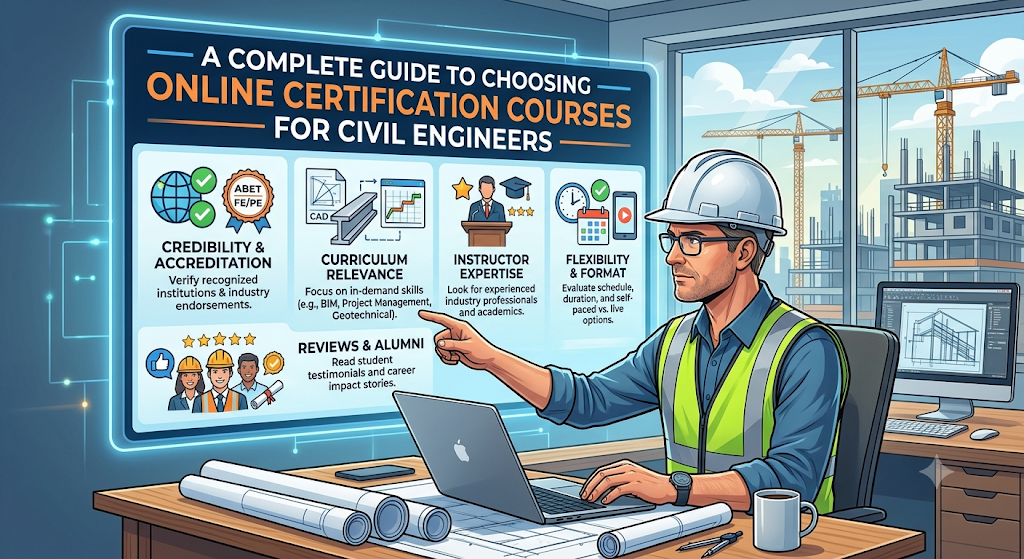
A Complete Guide to Choosing Online Certification Courses for Civil Engineers
The construction and infrastructure industry is evolving rapidly, creating new opportunities for engineers who possess both technical expertise and practical knowledge. As technologies, design standards, and software continue to advance, continuous learning has become essential for staying relevant in the profession. This is why online certification courses for civil engineers have gained significant popularity among both students and working professionals. These courses provide the flexibility to upgrade skills, learn industry-standard software, and gain practical exposure without disrupting academic schedules or professional commitments.
However, with countless learning platforms available today, selecting the right certification course can be challenging. A well-designed programme should not only enhance theoretical knowledge but also prepare learners to solve real-world engineering problems. Understanding what to look for in an online course can help you make an informed decision and maximise your investment in professional development.
Why Online Certification Matters in Civil Engineering
A civil engineering degree provides the academic foundation required to enter the profession, but industry expectations often extend beyond classroom concepts. Employers increasingly seek candidates who are familiar with current design methodologies, engineering software, project documentation, and practical applications.
Online certification courses bridge this gap by offering specialised training that complements formal education. These programmes allow learners to explore advanced topics while developing the confidence to work on real projects.
Some of the major advantages include:
- Learn at your own pace from any location.
- Gain exposure to current industry practices.
- Develop software proficiency alongside engineering concepts.
- Strengthen your resume with recognised certifications.
- Improve employability and career growth opportunities.
Factors to Consider Before Choosing an Online Certification Course
Not every online course delivers the same value. Before enrolling, evaluate several important aspects that determine the quality and usefulness of the programme.
Course Curriculum
The curriculum should go beyond theoretical explanations. Look for courses that include structural analysis, design calculations, practical examples, design codes, project-based assignments, and software applications. A comprehensive curriculum ensures that learners understand not only how engineering concepts work but also how they are applied in actual construction projects.
Experienced Faculty
Learning becomes more meaningful when instructors have practical industry experience. Trainers who have worked on real engineering projects can explain design challenges, decision-making processes, and professional practices that textbooks often overlook. Their practical insights help learners understand how engineering principles are implemented in real-life scenarios.
Practical Learning Approach
Civil engineering is an application-oriented discipline. The best certification courses include:
- Live project demonstrations
- Design calculations
- Software modelling
- Practical assignments
- Case studies
- Interactive doubt-solving sessions
These components help learners build confidence while applying engineering concepts independently.
Importance of Software Training
Modern civil engineering projects rely heavily on specialised software for analysis, modelling, detailing, and documentation. Therefore, software proficiency has become one of the most valuable skills for engineers entering the workforce.
Many quality certification programmes include software-focused modules that allow learners to understand the complete workflow from modelling to structural analysis and final design.
One of the most sought-after programmes today is a staad pro online course, which helps engineers perform structural analysis, design various structural components, and understand international design standards. Learning this widely used software significantly improves practical knowledge and prepares learners for professional engineering roles across infrastructure and construction projects.
Check Certification Value and Industry Recognition
Before enrolling in any programme, verify whether the certification holds value in the industry. While certificates alone may not guarantee employment, they demonstrate your commitment to continuous learning and professional development. Recruiters often appreciate candidates who have taken the initiative to enhance their technical skills beyond their academic qualifications.
A credible certification programme should also provide practical assignments, project work, and assessments that reflect real engineering challenges. These elements add greater value to your learning experience and help you showcase your capabilities during interviews.
Flexibility and Learning Support
One of the greatest advantages of online learning is flexibility. However, flexibility should not come at the cost of quality support. The ideal course should offer recorded sessions along with opportunities for live interaction whenever possible. A supportive learning environment allows students and professionals to learn confidently while balancing academic or work responsibilities.
Consider programmes that provide:
- Lifetime or extended access to learning materials
- Regular doubt-clearing sessions
- Downloadable study resources
- Technical support throughout the course
- Updated content aligned with current engineering practices
Compare Course Outcomes Before Enrolling
Rather than choosing a course based solely on price, compare the outcomes each programme offers. Ask yourself the following questions:
- Does the course include practical design exercises?
- Will I learn software used by the industry?
- Are current design standards and codes covered?
- Does the programme improve my job readiness?
- Will the knowledge remain useful as the industry evolves?
A course that answers “yes” to most of these questions is more likely to deliver long-term value than one focused only on theoretical instruction.
The Role of Continuous Learning in Career Growth
Civil engineering is constantly influenced by new technologies, sustainable construction methods, updated building codes, and digital design tools. Engineers who continue learning remain competitive in an evolving industry and are better prepared for leadership roles.
For students, additional certifications improve confidence before entering the job market. For experienced professionals, specialised courses help expand expertise, qualify for more challenging projects, and remain updated with industry advancements. Continuous learning also develops analytical thinking, problem-solving abilities, and decision-making skills that contribute to long-term professional success.
Conclusion
Choosing the right online certification course is an investment in your future. Instead of selecting a programme based only on popularity or cost, focus on practical exposure, experienced mentors, updated curriculum, and opportunities to develop industry-relevant skills. A well-designed programme equips you with the knowledge and confidence required to meet the growing demands of the engineering sector. If you are looking for guidance from a trusted structural design training institute, it is worth exploring organisations that combine real consulting expertise with comprehensive technical education.
One such name is Civilera, which has built its reputation by blending extensive structural engineering experience with practical, application-oriented training. Their programmes are designed to bridge the gap between academic learning and professional practice, enabling both students and working engineers to strengthen their technical capabilities and advance their careers with confidence.