
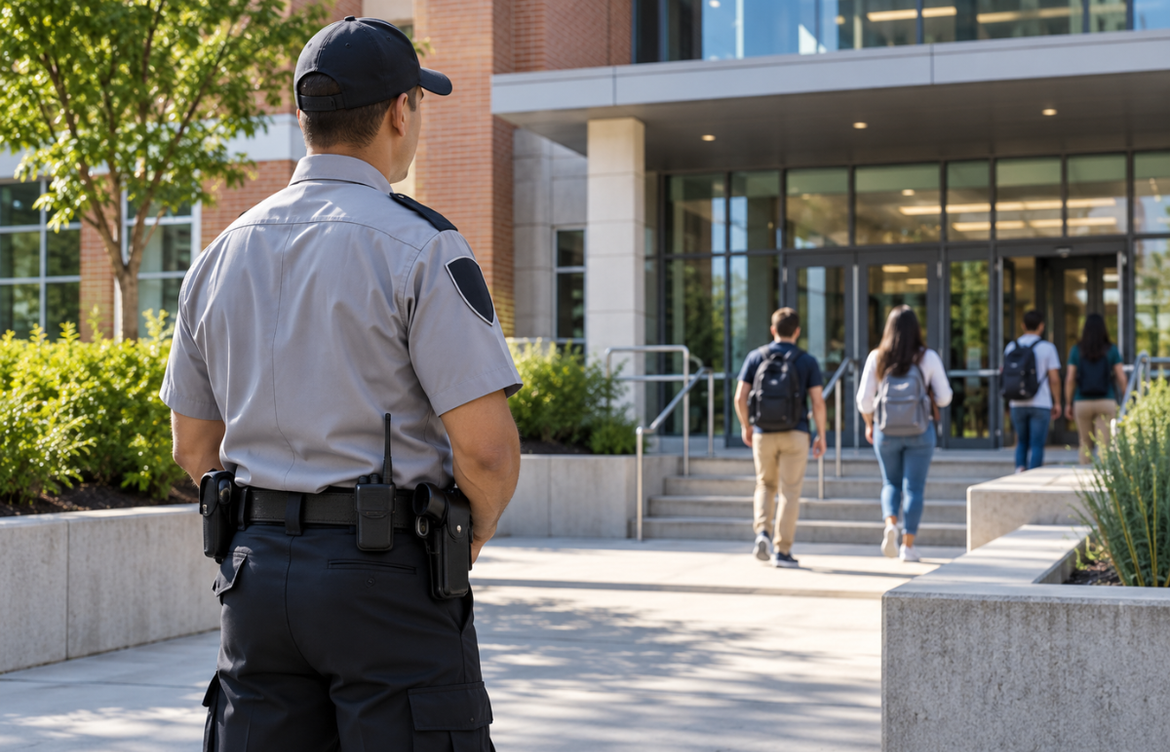
How Institutional Security Services Support Safer Institutions
Schools, hospitals, government buildings, and nonprofit organizations manage a constant flow of people, property, information, and activities. Their security requirements differ from commercial properties because the environment must remain accessible while risks are controlled. Effective protection requires understanding how a facility operates, where vulnerabilities exist, and how security measures can support normal activities. In this context, institutional security services provide a structured approach to access control, observation, incident response, and coordination with facility staff.
Understanding Institutional Security Needs
Institutional environments often contain multiple entrances, restricted areas, public spaces, parking areas, service corridors, and sensitive rooms. A hospital may protect medication areas and patient spaces, while a school may prioritize visitor screening and controlled access. Government facilities may have additional public-access requirements.
Planning should begin with a site-specific assessment covering operating hours, traffic patterns, emergency exits, vulnerable locations, surveillance, and existing procedures. The objective is to create layers of protection rather than depend on a single control.
Managing Access Without Disruptions
Access control is a visible part of institutional protection. Officers may verify identification, monitor entry points, maintain visitor records, issue temporary credentials, and direct visitors toward appropriate areas.
Effective access control should support authorized visitors while helping personnel identify unusual behavior or attempts to enter restricted areas.
For healthcare facilities, access management is especially important because hospitals must balance patient care with security. The Joint Commission identifies control of access to security-sensitive areas and procedures for security incidents as important elements of a safe physical environment.
Patrols, Observation, and Reporting
Routine patrols allow officers to observe conditions that fixed security technology may not identify by itself. Personnel can check entrances, parking areas, exterior boundaries, lighting, and doors for unusual behavior.
Observation becomes more useful when supported by accurate reporting. Incident reports should record relevant facts, times, locations, actions taken, and notifications made. Consistent documentation helps administrators identify recurring problems.
Supporting Emergency Preparedness
Security personnel can support emergency procedures by helping direct evacuations, securing affected areas, controlling access around an incident, guiding visitors, and communicating with emergency responders.
Preparation matters because emergencies can create confusion. Institutions should establish responsibilities and ensure personnel understand evacuation routes, communication procedures, and emergency contacts.
Healthcare organizations illustrate this approach. NewYork-Presbyterian describes security responsibilities around crime prevention, crime detection, and proactive risk assessment, including access controls and evaluation of security-sensitive areas.
Matching Protection to the Facility
The appropriate security model depends on an institution’s size, layout, schedule, population, risk profile, and technology. A small educational facility may need a different deployment pattern from a large medical campus. Staffing should reflect operational needs rather than relying on property size alone.
Training is equally important. Personnel should understand policies, communication expectations, visitor procedures, emergency plans, and de-escalation methods. Security should complement employees rather than interfere with their responsibilities.
Creating a Consistent Safety Framework
Institutional protection works best when personnel, procedures, technology, and facility management operate as one system. Access controls can reduce unauthorized entry, patrols can improve visibility, surveillance can support monitoring, and reporting can provide information for continuous improvement.
A well-designed program needs periodic review. Changes in building use, staffing, technology, public access, or local risks can alter security requirements. Reviewing incidents and operational feedback helps administrators determine whether procedures or staffing should be modified.
Ultimately, institutional security services are most effective when designed around the people, processes, and physical environment of a facility. The goal is not simply to react to incidents, but to establish consistent practices that support safety and normal operations.
Conclusion
Security in an institutional setting is an ongoing process rather than a one-time installation. Regular assessments, trained personnel, clear procedures, accurate reporting, and coordinated emergency planning can help facilities respond to changing risks while maintaining normal operations. Institutions should review security measures as building use, staffing, technology, and community needs evolve.
For facilities seeking a practical layer of day-to-day protection, unarmed security services can support access management, visible deterrence, observation, and assistance during routine or unexpected situations. When these responsibilities are integrated with institutional policies and emergency plans, institutional security services can contribute to a safer environment without unnecessarily disrupting the people who use the facility.