
Wood Sculpture Tools: A Practical Guide For Every Carving Stage
Wood sculpture is a discipline that rewards patience, precision, and a solid understanding of materials. Carving delicate figures or shaping large abstract forms both depend heavily on selecting equipment suited to the wood’s grain, density, and the level of detail required. Many beginners assume a single knife or chisel set is enough, but as projects grow more ambitious, the range of tools for wood sculpture needed expands considerably. Understanding how different implements function, from rough shaping to fine detailing, helps artists work more efficiently and reduces the risk of damaging both the wood and their hands.
Understanding Wood Grain Before You Carve
Every carving project starts with reading the wood itself. Softer woods like basswood and pine are forgiving for beginners, while denser hardwoods such as oak, walnut, and cherry demand sharper, heavier equipment and more controlled pressure. Grain direction determines how cleanly a blade cuts, and carving against the grain often causes splintering or tear-out. Recognizing these characteristics before picking up any implement saves time and prevents wasted material, especially on larger sculptural pieces where correcting mistakes is far more difficult than avoiding them from the start.
Roughing-Out Tools For Initial Shaping
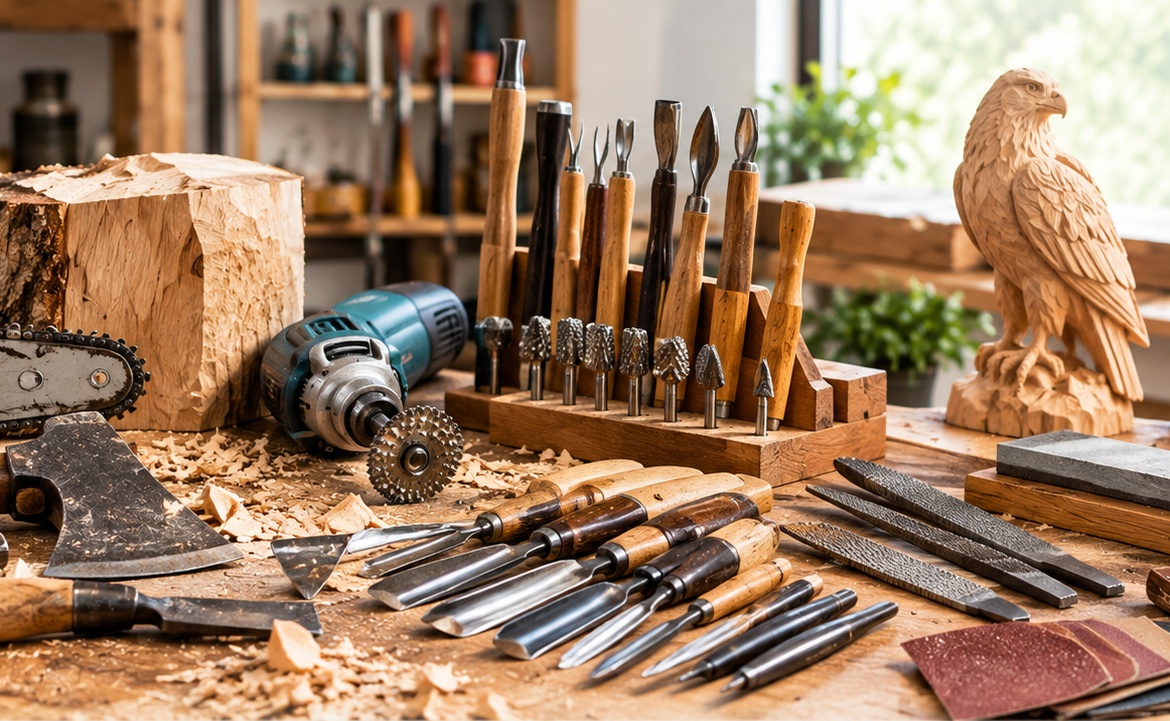
The earliest stage of any sculpture involves removing large amounts of material quickly. Chainsaws, angle grinders fitted with carving discs, adzes, and hatchets are commonly used here. These implements are not about precision but about efficiently establishing the rough silhouette of the piece. Choosing the correct tools for wood sculpture at this stage prevents fatigue and keeps the process moving, since manual removal of bulk material with only hand tools can take considerably longer and strain the wrists and forearms over extended sessions.
Detail And Finishing Tools
Once the basic form emerges, attention shifts to gouges, V-tools, chisels, and rotary carving bits for finer contours and texture work. Rasps and rifflers help smooth transitional surfaces, while sandpaper in graduated grits refines the final texture before any finish is applied. This is where craftsmanship becomes visible, and having a well-organized set of detail implements, rather than improvising with mismatched blades, noticeably improves control over intricate curves, facial features, or textured surfaces on figurative work.
Power Tools Versus Hand Tools
Deciding between power and hand equipment often comes down to project scale and desired finish. Power tools for wood sculpture speed up material removal dramatically and are especially useful for large installations or commercial-scale work, but they generate more dust and require proper ventilation and eye protection. Hand tools offer quieter, more controlled cuts and are often preferred for detailed or traditional carving styles. Many sculptors use both, relying on power equipment for shaping and hand tools for the final passes where subtlety matters most.
Maintaining And Sharpening Your Equipment
Dull blades are one of the most common causes of carving accidents, since they require more force and are more likely to slip. Sharpening stones, strops, and honing guides should be part of any sculptor’s routine. Storing implements properly, keeping edges covered, and cleaning off resin or sap buildup after each session extends their working life significantly. Investing time in maintenance is just as important as the initial selection, since even quality equipment performs poorly once it becomes dull or corroded.
Conclusion
Building a reliable collection of sculpture tools takes time, experimentation, and an honest assessment of the kind of carving one intends to pursue. From rough shaping to the finest detail work, each stage of the process benefits from equipment matched to the wood’s density and the artist’s technique. Sculptors who take the time to understand grain behavior, maintain sharp edges, and balance power tools with hand tools tend to produce cleaner, more consistent work over the long term, regardless of the scale or complexity of the piece they’re creating.