
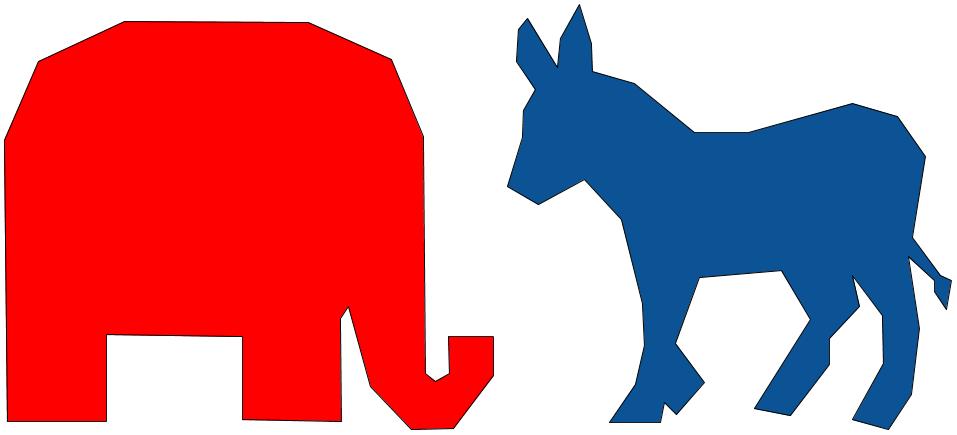
The Growing Divide: How U.S. Politics Has Turned Into Tribal Warfare
According to GZERO Media the United States faces one of its most divided political moments in modern history. As Republicans and Democrats grow increasingly polarized, the nation’s governance appears driven more by tribal loyalty than by policy or progress. With Congress paralyzed by dysfunction, Americans are left asking: Is the political system broken beyond repair?
The State of a Divided Nation
In recent years, the American political landscape has witnessed an unprecedented level of partisanship. According to a 2024 Pew Research Center survey, 86% of U.S. voters believe the country is more politically divided than ever before. This division extends beyond Washington—into workplaces, families, and communities. What was once healthy debate has turned into hostility, with partisans on both sides seeing the opposition as not just wrong, but dangerous.
Economically, this polarization also carries a price tag. Studies from the Brookings Institution estimate that political gridlock costs the U.S. economy over $300 billion annually due to delayed policy decisions and market uncertainty. This figure reflects not just lost opportunities, but also waning investor confidence in America’s political stability.
Republicans and Democrats: United in Division
Former GOP fundraiser Steven Law told GZERO World that both parties’ bases “want a fight.” This statement captures a grim truth about U.S. democracy — that compromise is now seen as weakness. Republicans, still largely aligned with former President Donald Trump’s populist agenda, have embraced confrontation as a political strategy. Meanwhile, Democrats, despite efforts to present a unified front, continue to struggle with internal divisions between moderates and progressives.
In the 2024 midterms, these divisions were on full display. While Republicans campaigned on border security, inflation, and energy independence, Democrats focused on reproductive rights, climate policy, and gun reform. Yet, rather than constructive debate, the result was a stalemate that left key federal bills stranded — including critical infrastructure and healthcare reforms.
Government Paralysis and Public Fatigue
The most visible consequence of this polarization is governing paralysis. The U.S. Congress, historically known for its ability to negotiate across the aisle, now struggles to pass even routine legislation. In fact, the 2023–2024 congressional term passed fewer bills than any session in the last 50 years, according to the Congressional Research Service.
Americans are frustrated. A Gallup poll shows that 78% of citizens disapprove of Congress, with “partisan conflict” cited as the top reason. For ordinary Americans, political infighting means delayed budgets, inconsistent federal support, and uncertainty over critical programs like Medicare, education funding, and disaster relief.
Media, Misinformation, and the Amplification of Division
The media ecosystem plays a significant role in this ongoing divide. Traditional news outlets and social media platforms alike have contributed to echo chambers that reinforce biases. Studies from the MIT Media Lab reveal that misinformation spreads six times faster on social media than factual news, often deepening mistrust between political groups.
This polarization isn’t just ideological—it’s psychological. Americans now self-identify with political affiliations more strongly than with religion or region, creating a new form of “tribal identity.” The consequences are profound: increased social fragmentation, lower civic engagement, and greater hostility toward opposing viewpoints.
Can Bipartisanship Still Exist?
Despite the bleak outlook, some analysts believe bipartisanship is still possible. Political reform advocates point to state-level examples where Republicans and Democrats have collaborated on local issues such as education and infrastructure. Moreover, younger generations—particularly Gen Z voters—show signs of rejecting extreme partisanship, favoring candidates who focus on solutions over ideology.
The road to recovery, however, will require deliberate effort. Experts suggest reforms like ranked-choice voting, campaign finance transparency, and media literacy education to rebuild trust and reduce polarization.
As Steven Law emphasized in his GZERO World interview, “Congress can’t even pass bills to spend money. I mean, that’s just how bad it’s gotten.” But he also noted that public pressure and civic engagement could be the key to restoring functionality. Americans must not just vote—they must demand accountability.
America’s Path Forward
To heal its political wounds, the U.S. must rediscover the art of dialogue. History shows that periods of division—from the Civil Rights era to the Great Recession—have always been followed by renewal. In 2025, the same opportunity exists: to rebuild a political system grounded in respect, compromise, and evidence-based policy.
The message is clear—unity is not a luxury; it’s a necessity.
Source: GZERO Media
Want to explore more thought-provoking stories like this? Read more of our latest blogs on Writero Critics to stay informed about global politics, business, and media trends.