
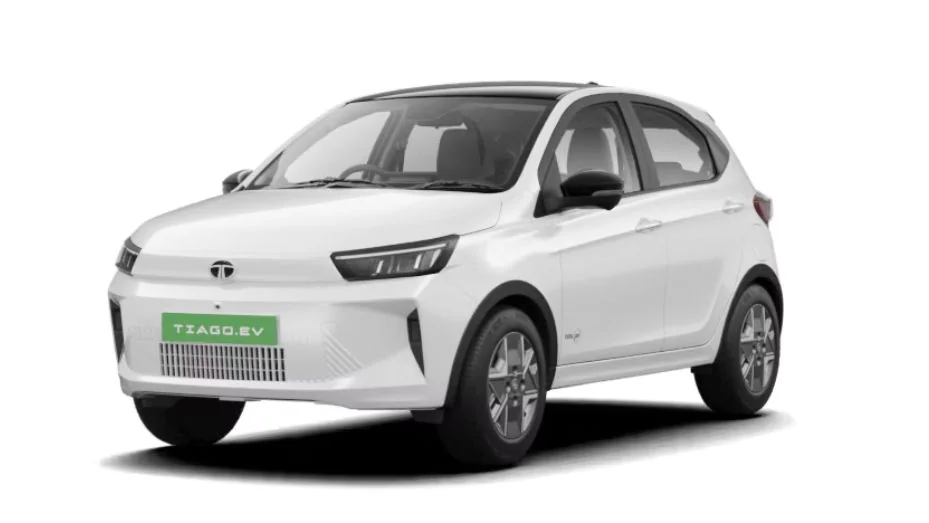
Tata Tiago EV Price: Is Paying for the Top Variant Really Worth It?
The Tiago.ev now has only four main versions, making its value equation easier to test. The top model costs only around Rs. 50,000 more than the larger-battery Pure+ 24, so buyers should focus on whether its added equipment improves daily use rather than asking whether a flagship badge is automatically better.
The current four-variant price ladder
The current Tata Tiago EV Price line-up opens with Smart 19 at Rs. 6,99,000 ex-showroom, followed by two Pure+ versions and the Creative+ 24 flagship. The largest price jump is not the final trim upgrade; it comes when moving up from the entry model and then when selecting the larger battery.
Looking at all four variants side by side shows where the money is going. These are current ex-showroom reference prices, and the final amount should be confirmed on the manufacturer configurator or dealer quote before purchase.
| Variant | Battery | Ex-showroom price |
| Creative+ 24 | 24 kWh battery | Rs. 9,99,000 |
| Pure+ 24 | 24 kWh battery | Rs. 9,49,000 |
| Pure+ 19 | 19.2 kWh battery | Rs. 8,49,000 |
| Smart 19 | 19.2 kWh battery | Rs. 6,99,000 |
The top-model question only matters after battery choice
If the 19.2 kWh battery comfortably covers your routine, moving to Creative+ 24 is not a Rs. 50,000 decision; it is a much larger jump from the lower battery versions. The first question is therefore range need. Only buyers who already prefer the 24 kWh battery should compare Pure+ 24 and Creative+ 24 as a close upgrade decision.
This distinction prevents feature excitement from disguising a battery change. A bigger battery can improve flexibility, but it also costs more. If home charging is easy and daily driving is short, the additional capacity may spend most of its life unused.
What makes the Creative+ 24 easier to justify?
A higher trim is easier to justify when its features solve repeat problems. Parking-camera upgrades, convenience technology or richer cabin equipment can be worth paying for when they are used on every commute. If the added features are primarily cosmetic for you, the Pure+ 24 leaves more budget for insurance, charger setup or other ownership costs.
Use frequency of use as the filter instead of the feature count. The table below turns the trim decision into a practical ownership test.
| Question | If yes | What it suggests |
| Do you need the 24 kWh battery? | Yes | Compare Pure+ 24 and Creative+ 24 |
| Will top-trim features be used weekly? | Yes | Creative+ 24 premium may be justified |
| Is the car mainly a short-range second vehicle? | Yes | 19.2 kWh versions deserve a closer look |
| Is home charging uncertain? | Yes | Solve charging before choosing any variant |
How does Tiago EV compare with the petrol Tiago?
The Tata Tiago price for the petrol car starts much lower than the electric version, so the EV should not be justified only by its lower energy cost. Calculate the purchase-price difference, annual kilometres and charging cost over the period you expect to own the car. A high-running urban user can recover more of the EV premium than someone who drives occasionally.
Also compare use case. An EV that can charge at home offers a very convenient daily routine, while a petrol car can refuel quickly anywhere. The financially cheaper option and the operationally easier option may not be the same for every household.
What should you verify before paying for the top model?
Confirm the exact battery capacity, charger supplied or offered, high-voltage battery warranty terms, tyre size and the features included in the current model year. Ask for the vehicle’s manufacturing month before invoicing because a dealer may hold stock from an earlier production period with a different equipment mix.
Keep the loan decision separate
An extra Rs. 50,000 can look insignificant when spread across a long EMI tenure, but that framing encourages unnecessary upgrades. Compare the total amount repaid on Pure+ 24 and Creative+ 24 at the same loan terms. If the top trim still feels worth the incremental total cost, the decision is more robust.
Avoid using all available savings as the down payment. Keep money aside for insurance renewal, tyres, home electrical work and household emergencies. Low EV running cost does not remove the need for a healthy ownership reserve.
Confirm what changes between Pure+ 24 and Creative+ 24
Ask the salesperson to demonstrate only the features that differ between the two 24 kWh Tiago.ev variants. Drive or park both if possible, and write down which differences you noticed without prompting. If the extra equipment does not change the way you use the car, keep the Rs. 50,000 in your ownership reserve. If it solves a daily problem, the upgrade has a clear and defensible reason.
Conclusion
The top Tiago EV can be good value for a buyer who already wants the 24 kWh battery and will use its additional features regularly. It is less compelling when the car only needs to cover short predictable city trips. Choose the battery first, then compare the Rs. 50,000 top-trim step on total ownership value rather than on EMI alone.