
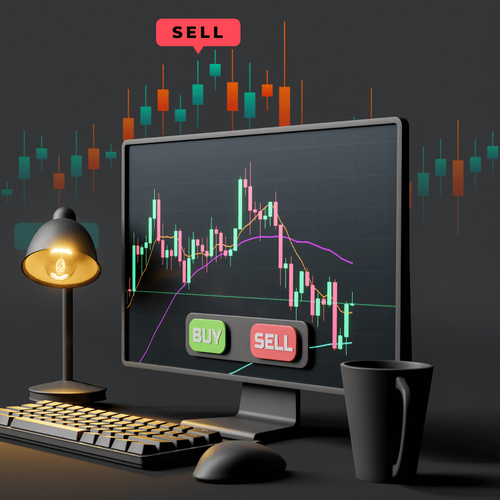
What Is Forex Trading Compared With Stock Trading?
A currency chart and a stock chart may look almost identical, yet the forces moving them are quite different. One represents the relative value of two national currencies. The other reflects what investors are willing to pay for a share of a specific company. That distinction changes how traders interpret news, choose trading hours, and manage risk.
For anyone asking what is forex trading compared with buying and selling stocks, the clearest answer lies in the source of each opportunity. Currency traders study economies in relation to one another, while stock traders assess individual businesses within a broader market. Neither market is inherently easier. Each simply rewards a different kind of attention.
Economic Relationships Versus Company Performance
Currency prices are always comparative. EUR/USD can rise because economic conditions in the eurozone improve, because the United States weakens, or because expectations shift on both sides at once. A trader is never evaluating the euro in isolation. The question is whether it deserves a higher value relative to the dollar.
Stocks have a more concentrated set of drivers. Earnings, margins, product demand, executive decisions, and industry competition can move one company even while the wider market remains quiet. A disappointing revenue forecast may push a stock down 12 percent after the closing bell, with little effect on its competitors.
This creates a practical difference in research. Currency traders often follow central banks, inflation, employment, and bond yields. Stock traders spend more time with earnings reports, guidance, sector trends, and company-specific announcements.
Trading Hours Change the Character of Price Movement
The currency market runs continuously from Monday morning in Asia through Friday afternoon in New York. Activity does not remain evenly distributed, however. EUR/USD usually attracts deeper liquidity when London and New York are active, while pairs involving the yen or Australian dollar may respond more sharply during Asian hours.
Stocks follow the schedule of their exchange, with the heaviest participation normally appearing around the opening and closing auctions. Premarket and after-hours trading is available in some markets, but spreads can widen and order books may become noticeably thinner.
More hours do not automatically create more good trades.
A currency pair drifting through a quiet session can produce several false breaks because there is not enough participation to sustain direction. Meanwhile, a stock may open with a large gap after an earnings release, leaving traders to decide whether the overnight repricing is complete or only beginning.
How the Same News Creates Different Setups
Consider a hotter-than-expected US inflation report. The dollar may strengthen within seconds as traders price in the possibility that interest rates will remain high. EUR/USD breaks below its morning range, triggers sell orders under the prior low, and then rebounds sharply when the initial wave of positioning becomes crowded. A trader who sold the first break may be caught in a liquidity sweep rather than a lasting trend.
Stocks can react less uniformly to the same release. Higher rate expectations may pressure expensive technology shares because future earnings are discounted more heavily, while some bank stocks benefit from expectations of stronger lending margins. The index can fall even as selected sectors rise.
Experienced traders wait to see which part of the reaction persists. Beginners often assume the first move has settled the argument.
Leverage, Diversification, and Hidden Concentration
Currency accounts commonly offer more leverage than ordinary cash stock accounts. That can make a small exchange-rate movement financially significant. The price may move only half a percent, but the account impact depends on how much exposure was built on top of the available capital.
Stock traders face a different concentration problem. Owning shares in several technology companies may look diversified, yet those positions can respond to the same interest-rate shock. Currency traders can make a similar mistake by holding EUR/USD, GBP/USD, and short USD/CHF positions. All three may amount to one large bet against the dollar.
Here is the counterintuitive part: the market with more available instruments does not necessarily provide more diversification. Correlation matters more than the number of lines shown in an account.
So, what is forex trading best compared with? It is closer to trading relationships between economies than selecting standalone assets. Stock trading centers more directly on ownership, corporate results, and valuation, although macroeconomic conditions still matter.
Before choosing either market, compare one week of planned trades using the same fixed account risk. Record the scheduled catalysts, active trading hours, expected spread, and correlated exposure for every position. The better fit is the market whose risks remain understandable before the order is placed, not the one that appears to offer the most movement.