
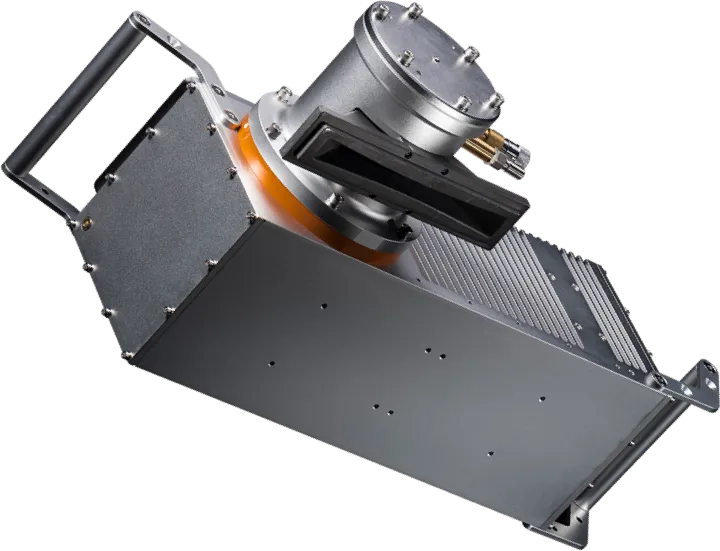
Why Microfocus X-ray Source Matters for Advanced X-ray Applications
Advanced X-ray systems are expected to deliver sharper images, dependable results, efficient operation, and reliable performance across specialized environments. A microfocus X ray source can play a critical role because precise X-ray generation supports detailed imaging where small structures, internal defects, or material variations must be clearly identified. As inspection equipment becomes more compact and demanding, source design has become central to overall system performance.
Understanding Microfocus Technology
Microfocus technology is built around a very small focal spot, helping concentrate X-ray generation into a highly localized area. A smaller focal spot can reduce geometric unsharpness and improve the ability of an imaging system to distinguish closely spaced features. This is useful when inspecting miniature components, fine structures, or subtle defects.
Higher magnification and fine-detail detectors make focal spot size even more important. The source must complement detector performance and imaging geometry to support sharp results.
Why Image Resolution Matters
Resolution is fundamental to many X-ray applications. In industrial inspection, operators may need to identify cracks, voids, inclusions, weld imperfections, or changes in material thickness. In electronics, systems may inspect densely packed components and assemblies where features are extremely small. Analytical applications can also require detailed visualization.
A small focal spot helps limit blurring associated with source geometry. Combined with suitable detector resolution, magnification, and system design, it can help produce clearer images and make inspection more informative for operators and automated systems.
Supporting Non-Destructive Testing
Industrial non-destructive testing is a strong example of why precise X-ray generation matters. X-ray inspection can evaluate components without cutting, breaking, or otherwise damaging them. This is valuable for aerospace, automotive, manufacturing, and other sectors where internal quality must be verified while preserving the tested component.
Applications can include industrial NDT, portable NDT, thickness gauging, sorting and recycling, and inspection of wood logs and boards.
Enabling Electronics Inspection
Modern electronics are becoming smaller and more densely assembled. Critical connections can be hidden beneath packages, boards, or assemblies, making visual inspection limited. X-ray imaging provides a way to inspect internal structures without physically opening products.
The website identifies component counting as an electronics application and connects X-ray technology with streamlined manufacturing and reduced overhead. Source precision is especially valuable when manufacturers work with miniaturized components and automated quality-control processes.
Security and Inspection Systems
Security screening is another area where X-ray performance directly affects operational efficiency. Baggage, parcel, cargo, vehicle, and portable inspection systems need dependable imaging so operators can evaluate contents quickly. Applications include CT explosive detection, baggage scanning, portable EOD inspection, and mobile backscatter systems.
Compact construction, integrated cooling, radiation shielding, and dependable output are valuable when equipment operates continuously or within constrained platforms.
Stability and Power Control
High-resolution imaging is not achieved through focal spot size alone. Stable voltage, current control, thermal management, and repeatable output are also essential. Inconsistent power can affect exposure conditions and image uniformity, while inadequate thermal management may reduce reliability during demanding operating cycles.
This is why high voltage power supply manufacturers focus on precise power delivery, cooling, control circuitry, and integration. Generator technology described on the website includes oil-based thermal dissipation, closed-loop filament control, multiple mounting options, and digital RS-232 interfaces. These features can help developers create dependable X-ray platforms with fewer integration challenges.
Compact Design and OEM Integration
Space is often limited inside modern inspection and imaging equipment. Integrating the X-ray tube, power supply, and control electronics into a compact architecture can simplify equipment design and reduce the number of separate components an OEM must accommodate.
The website describes integrated X-ray sources as combining these elements into a single compact product. It highlights space-saving integration, consistent output, simpler installation, and minimal maintenance. Its catalog also describes customizable designs for OEM systems and specifications covering output voltage, current, power, and focal spot size.
Customization for Specialized Applications
Not every X-ray application has the same requirements. A security scanner may prioritize penetration and throughput, while an electronics inspection system may prioritize detail. An analytical instrument may need stable and repeatable output, whereas an industrial system may require a rugged and compact configuration.
Customization allows source and generator characteristics to align with application goals. This flexibility can help developers select technology suited to their system architecture.
Reliability Across Industries
The value of precise X-ray technology becomes most visible when reliability must be maintained over long operating periods. Industrial inspection, security screening, food quality control, analytical testing, and manufacturing processes can all depend on repeatable imaging.
Food applications include foreign contaminant detection and quality control, where X-ray systems can identify materials such as glass, plastic, metal, and bone fragments. Analytical applications include X-ray spectrometry, where stable and repeatable output supports qualitative and quantitative material analysis.
Choosing the Right X-ray Source
Selecting a source involves more than nominal power. Developers should consider focal spot size, voltage, current, duty cycle, thermal management, space, control interfaces, shielding, and imaging geometry.
Compatibility with the X-ray tube and detector is equally important. The right combination can improve system efficiency and help maintain reliable image quality throughout the equipment lifecycle. For OEM developers, customizable and integration-ready technology can reduce development complexity and support efficient product design.
Future of Advanced X-ray Applications
As inspection systems become more automated and products become smaller and more complex, advanced platforms will need compact architectures, sophisticated control, efficient thermal management, and reliable output. Carefully selected X-ray components can help OEMs meet specialized inspection and imaging requirements.
Conclusion
A microfocus X ray source matters because advanced X-ray applications depend on detailed imaging, controlled output, reliable operation, and efficient system integration. Its small focal spot can support improved spatial detail when the wider imaging architecture is designed appropriately. Combined with stable high-voltage generation, effective cooling, customization, and compact integration, source technology becomes a vital part of modern inspection and imaging platforms across multiple industries.
For advanced imaging needs, VJ X-Ray delivers integrated X-ray sources and high-voltage generators for OEM applications across security, industrial, medical, food, electronics, and analytical sectors. Its solutions offer compact design, stable output, customization, and integration flexibility. With extensive engineering expertise, VJ X-Ray helps OEM partners build reliable, efficient X-ray technologies tailored to specialized application requirements worldwide with confidence and consistency.