
How AI Is Changing Revenue Cycle Management in 2026
Denied claims and slow payments drain millions from healthcare budgets every year. Revenue cycle management has always been the backbone of a healthy medical practice, but manual processes simply can’t keep up anymore. In 2026, artificial intelligence is reshaping how providers track claims, predict denials, and collect payments faster. This article explains exactly how AI is changing revenue cycle management, what it means for your organization, and practical steps you can take to improve your own processes today.
Revenue Cycle Management The Basics Explained
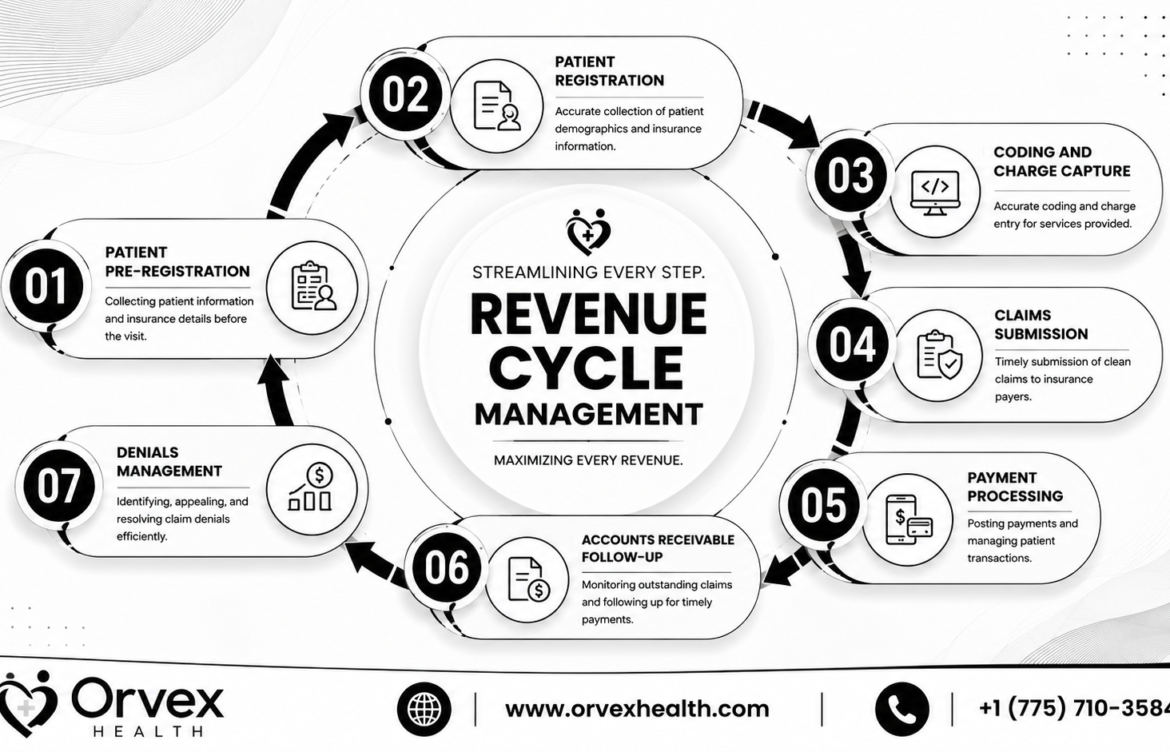
Revenue cycle management (RCM) covers every financial step a healthcare provider takes, from scheduling a patient appointment to collecting the final payment. It includes eligibility checks, coding, claims submission, denial management, and patient billing.
When any single step breaks down, the entire cycle slows. That’s why hospitals and clinics increasingly rely on smarter, data-driven tools rather than manual spreadsheets and phone calls.
Why Revenue Cycle Management Matters More Than Ever
Healthcare margins are tighter than ever, and administrative costs keep rising. A strong revenue cycle directly affects whether a practice can invest in staff, equipment, and patient care.
- Faster reimbursements improve cash flow
- Fewer denials mean less rework for billing teams
- Accurate coding reduces compliance risk
As patient volumes grow and payer rules change constantly, providers need systems that can adapt quickly. This is exactly where AI has started to make a measurable difference.
How AI Is Changing Revenue Cycle Management
Automated Claims Processing
AI-powered tools can now review claims before submission, flagging missing information or coding errors in seconds. This reduces the back-and-forth between billing teams and payers, helping claims get approved on the first try more often.
Predictive Analytics for Denials
Machine learning models can analyze historical claims data to spot patterns that typically lead to denials. Billing teams can then fix issues proactively, rather than reacting after a rejection arrives weeks later.
AI-Powered Patient Payment Estimates
Patients increasingly expect upfront cost clarity. AI tools can generate more accurate payment estimates based on insurance coverage and treatment plans, which helps reduce confusion and improves collection rates.
The Future of Healthcare Revenue Cycle Management
The future of healthcare revenue cycle management points toward greater automation, but human oversight will remain essential. AI is best used to handle repetitive, data-heavy tasks, freeing billing staff to focus on complex cases and patient communication.
Expect to see more integration between electronic health records, payer systems, and AI platforms, creating a smoother, more connected financial experience for both providers and patients. Real-time eligibility checks, automated prior authorizations, and smarter appeals workflows are likely to become standard features rather than premium add-ons.
For smaller practices, this shift also means AI tools once reserved for large hospital systems are becoming more affordable and easier to adopt, leveling the playing field across the industry.
How to Improve Revenue Cycle Management With AI
Start With Data Quality
AI tools are only as good as the data behind them. Clean, consistent patient and billing records are the foundation for accurate predictions and fewer errors down the line.
Choose the Right Revenue Cycle Management Services
Not every AI solution fits every organization. When evaluating revenue cycle management services, consider:
- Integration with your existing EHR system
- Transparency in how AI decisions are made
- Vendor support and training resources
- Track record with similar-sized practices
Taking time to vet vendors carefully pays off in smoother implementation and better long-term results.
AI vs Traditional Revenue Cycle Management
| Factor | Traditional RCM | AI-Enhanced RCM |
| Claims review | Manual, time-consuming | Automated, near-instant |
| Denial prediction | Reactive | Proactive, pattern-based |
| Patient estimates | Often inaccurate | More precise, data-driven |
| Staff workload | High on repetitive tasks | Focused on complex cases |
Challenges to Consider Before Adopting AI
AI isn’t a magic fix. Implementation costs, staff training, and data privacy concerns all require careful planning. Additionally, no tool can fully replace human judgment, especially in complex billing disputes or unusual patient circumstances.
Change management is another hurdle. Staff need time and training to trust AI recommendations, and workflows often need to be redesigned rather than simply layered on top of old processes. Organizations should treat AI as a supporting tool rather than a complete replacement for experienced billing professionals.
Frequently Asked Questions
What is revenue cycle management in healthcare?
Revenue cycle management is the financial process that tracks a patient’s care journey, from scheduling and insurance verification through billing and final payment collection. It ensures providers get paid accurately and on time for services rendered.
How does AI improve revenue cycle management?
AI improves revenue cycle management by automating claims review, predicting likely denials before submission, and generating more accurate patient payment estimates. This reduces manual errors and speeds up the overall reimbursement process.
What are common revenue cycle management services?
Common services include eligibility verification, medical coding, claims submission, denial management, and patient billing support. Many providers now outsource part of these services to specialized companies that use AI-driven platforms.
Is AI replacing revenue cycle management staff?
No, AI is designed to support staff rather than replace them. It handles repetitive, data-heavy tasks, allowing billing teams to focus on complex claims, patient communication, and exceptions that require human judgment.
How can a small practice start improving revenue cycle management?
Small practices can start by cleaning up patient data, reviewing common denial reasons, and researching affordable AI-powered billing tools. Even modest automation in claims checking can noticeably reduce errors and speed up payments.