
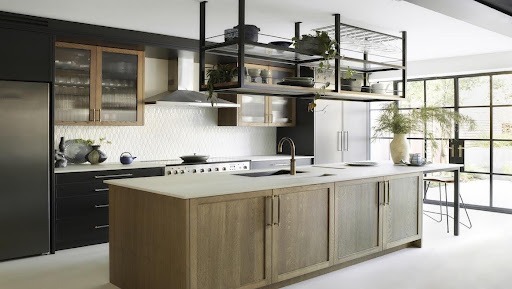
Making Heritage Architecture Work with Contemporary Joinery
Heritage architecture brings proportion, texture and evidence of time. Contemporary joinery brings precision, storage and the ability to support modern appliances. The two can work together, but harmony does not come from copying old details onto new cupboards. It comes from deciding what deserves emphasis, what can remain quiet and where a clear contrast will feel more respectful than imitation.
The room should be read before it is redesigned. Original windows, fireplaces, cornices, floorboards and wall thicknesses often establish a strong order. Their condition and significance may vary, and local requirements can affect what changes are possible. A careful survey should record irregular walls, levels and services as well as decorative features. Bespoke kitchen designers can then position cabinetry so that important elements remain legible rather than being crowded or partly concealed.
Proportion is usually more important than ornament. Tall ceilings may support full-height joinery, yet a continuous wall of cabinets can overwhelm delicate windows or plasterwork. Leaving breathing space around an original feature can strengthen its presence. In another room, aligning new cabinetry with existing door heads or picture rails may create calm. These relationships help modern work feel anchored to the architecture without pretending to be original.
Colour can connect different periods with restraint. Joinery might echo a muted tone found in stone, timber or stained glass, or it might use a deeper shade to stand apart. Exact historical matching is not always necessary. What matters is the way colour changes under daylight and artificial light, and how it affects the perceived weight of the cabinets. Samples should be viewed in the room rather than chosen only from a screen or showroom.
Material contrast can be equally effective. Smooth painted panels may sit comfortably beside rough brick, while finely detailed timber can respond to old floorboards without copying their species or finish. Handles offer another point of connection, but overly decorative hardware can turn the kitchen into a pastiche. Bespoke kitchen designers often achieve a more convincing result through disciplined junctions, shadow lines and carefully scaled details.
Services require practical care. Older homes may have limited power, uneven floors, restricted ventilation routes or concealed structural issues. Appliances and plumbing should be planned with qualified specialists, particularly where new penetrations could affect significant fabric. Removable panels and accessible service zones can reduce future disruption. Contemporary performance is valuable, but it should not depend on unnecessary damage to the building.
Freestanding elements can help bridge old and new. An island that reads as a piece of furniture may feel lighter than fixed cabinetry, especially in a formal room. A pantry wall can be treated as quiet architecture, allowing a fireplace or window to remain the focal point. Open shelves may suit selected objects, though they should not be added simply to create a period look. Every element needs a practical role.
Lighting can mediate between the periods. New task lighting should make benches safe and useful, while ambient light can reveal plaster, brick or timber without flattening their texture. Decorative fittings may reference the scale of the house rather than copy a historical style. Bespoke kitchen designers can coordinate concealed light, pendants and existing windows so that the room feels balanced after dark as well as in daylight. Thoughtful lighting allows contemporary joinery to remain crisp while heritage features retain depth.
This restraint leaves room for future owners to understand the original building. It can also make later repairs simpler, because new work is clearly identifiable and access has been considered from the start.
The most successful heritage kitchens avoid a false choice between preservation and modern living. They respect the building’s strongest features while providing efficient storage, lighting and work areas. The joinery does not need to disappear, nor should it compete for attention. When proportions, materials and junctions are handled carefully, old and new remain distinct but connected. The room feels settled because each period is allowed to speak in its own language.