
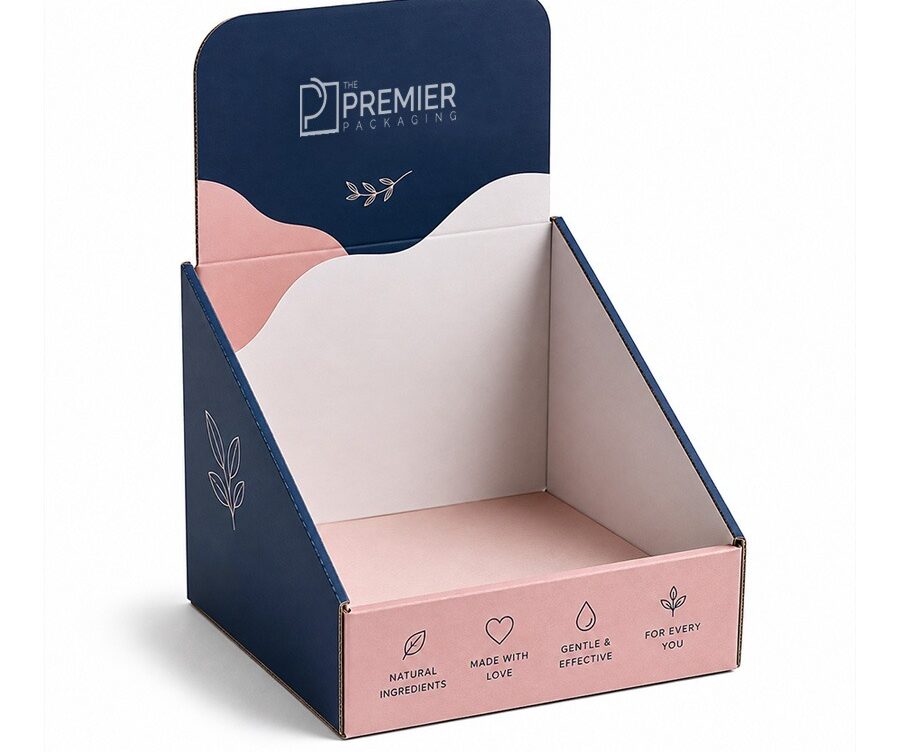
Cost Considerations and ROI of Investing in Display Packaging
Every packaging conversation eventually turns into a money conversation. Somebody on the team asks how much a custom box is going to cost, and somebody else asks whether it’s actually worth it, and then the whole thing stalls for a few weeks while nobody wants to be the one who signs off on the spend. I get it. Display packaging isn’t cheap the way a plain shipping box is cheap, and it’s genuinely hard to put a number on something as fuzzy as “makes the product look better.”
But here’s the thing display packaging isn’t really a design expense. It’s closer to a sales tool that happens to be made of cardboard. Once you start looking at it that way, the cost question gets a lot easier to answer.
Why the Upfront Cost Feels Bigger Than It Is
A basic shipping carton might run you a few cents a unit. A well-built display box with custom printing, structural cuts, maybe a foil accent or a window that can run several times more per unit. Seeing that gap in a quote is usually what makes people hesitate.
What gets left out of that comparison, though, is what each box is actually doing. A shipping carton’s only job is to survive the trip from warehouse to store. Custom display boxes has to survive that same trip and then sell the product once it’s sitting on a shelf or counter. Those are two completely different jobs, and pricing them the same way doesn’t really make sense.
What You’re Actually Paying For
The materials themselves
- Board thickness and flute type change the price noticeably a double-wall structure costs more than single-wall, but it also survives longer in a busy retail environment.
- Finishes like matte lamination, spot UV, or foil stamping add cost per unit, sometimes 10 to 30 percent depending on complexity.
- Specialty cuts, like die-cut windows or structural folds, need custom tooling, which is usually a one-time setup fee rather than a per-unit cost.
The order size
- Smaller runs cost more per unit almost every time, because setup costs get spread across fewer boxes.
- A lot of suppliers have a real sweet spot somewhere between 500 and 2,000 units where the per-unit price drops noticeably.
- Ordering too small to “test the waters” often ends up costing more per box than just committing to a slightly bigger run from the start.
The design complexity
- A simple one-color print job with a straightforward structure is going to be the cheapest option by a wide margin.
- Multi-panel structures or anything requiring hand assembly add labor cost that shows up in the final quote.
- Every extra design revision before the final print run adds a bit of cost too, so it pays to get the mockup right before committing.
The Part Nobody Puts in the Quote: What It Actually Does for Sales
This is where the ROI conversation actually lives, and it’s also the part that’s hardest to measure with a spreadsheet. A handful of things tend to show up consistently when brands upgrade from generic packaging to a proper display setup.
Products placed in a well-designed display box get picked up more often at checkout counters, simply because they’re easier to notice and don’t blend into the background of a busy store. That’s not some controversial claim retailers themselves often push for better displays because they’ve seen the sales lift firsthand across other brands.
There’s also a repeat-purchase angle that’s easy to overlook. A customer who has a good unboxing or in-store experience is more likely to remember the brand later, even if they don’t consciously register why. Packaging is doing quiet brand-building work in the background, on top of the immediate sale.
And retailers themselves respond to this. A brand that shows up with a professional, well-built display box is often taken more seriously during buying meetings than one showing up with plain, unbranded packaging. That’s not really about the box’s cost it’s about what the box signals regarding how seriously the brand takes its own product.
Comparing the Real Costs Side by Side
| Packaging Type | Typical Cost per Unit | Shelf Impact | Reorder Frequency | Best Fit For |
| Basic Shipping Carton | Low | Minimal | High | Warehouse-to-store transit only |
| Standard Printed Box | Low-Medium | Moderate | Medium | General retail stocking |
| Custom Display Boxes | Medium-High | High | Medium | Counter and shelf-facing promotion |
| Premium Rigid Display | High | Very High | Low | Luxury or gift-focused retail |
| Interactive/Novelty Display | High | Very High | Low | Seasonal or flagship campaigns |
Looking at it this way, the expensive option in the middle rows often ends up being the most cost-efficient overall, because it balances a real sales impact against a reorder frequency that doesn’t drain the budget every few weeks.
How to Actually Estimate ROI Before Committing
A rough way to think about it: take the extra cost per unit compared to basic packaging, then estimate how many additional units you’d need to sell per display to cover that difference. If a display box costs an extra 40 cents per unit over standard packaging, and your product has a reasonable margin, it often only takes selling a handful of extra units per display cycle to break even. Everything past that is pure upside.
It’s worth actually running these numbers before ordering rather than guessing. Even a rough spreadsheet with your unit cost, expected sell-through rate, and margin gives a much clearer answer than gut feeling alone.
A Few Mistakes That Quietly Waste Money
Ordering the cheapest possible option and being surprised when it doesn’t hold up past a couple weeks in-store. Going all-in on premium finishes for a product with thin margins, where the packaging cost eats too much of the profit per unit to make sense. And probably the most common one never actually tracking whether the display packaging changed sales at all, so the next budget conversation starts from zero instead of from real data.
Final Words
Display packaging costs more upfront than plain packaging, and there’s no getting around that. But treating it purely as a cost misses what it’s actually doing — it’s sitting on a shelf or counter working as a quiet, constant sales pitch that never takes a day off. The brands that get real value out of it are usually the ones that actually measure the difference instead of just assuming it’s working, and that adjust the material and finish to match what the product can actually afford to spend on packaging without cutting into margin.
FAQs
Is custom display packaging worth it for a small brand?
Often yes, even at a small scale, as long as the order size and finish level match the budget. A mid-tier printed box can still make a real difference without needing premium rigid board.
How much more does display packaging typically cost than standard packaging?
It varies a lot depending on finish and complexity, but a reasonable range is anywhere from 20 percent to several times the cost of a basic printed box.
What’s the fastest way to tell if display packaging is paying off?
Track sell-through rate at locations using the display versus locations without it, over the same time period. That comparison usually tells you more than any other single metric.
Does a more expensive display box always sell better?
Not necessarily. Fit matters more than price a display that matches the product’s price point and target customer often outperforms an objectively more expensive one that doesn’t match the brand.
How do I know what order size makes sense for my budget?
Look at where the per-unit price drops noticeably in your supplier’s pricing tiers, usually somewhere in the low thousands, and weigh that against how quickly you’d actually sell through that quantity.