
Understanding Market Volatility: Strategies for Smarter Derivatives Trading
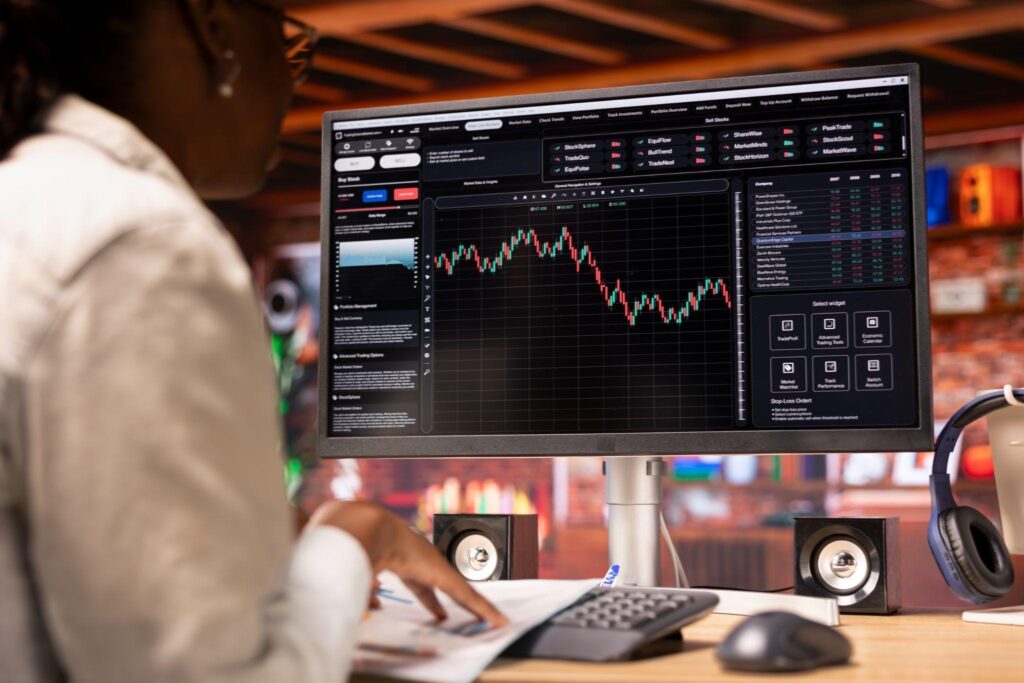
Markets rarely move in a perfectly predictable direction. Prices can accelerate within minutes, reverse sharply after a news announcement, or remain unsettled as investors respond to changing economic conditions. For derivatives traders, these movements create both opportunities and significant risks. Understanding what drives volatility is therefore essential for anyone looking to make informed decisions rather than react impulsively to short-term price swings.
For traders monitoring the Live NSE Derivatives Market, volatility can provide opportunities to manage exposure, hedge positions, and potentially benefit from directional movements. However, successful derivatives trading requires more than identifying whether prices may rise or fall. It demands preparation, disciplined risk management, market awareness, and a clearly defined strategy.
What Is Market Volatility?
Market volatility refers to the frequency and magnitude of price movements within a financial market. When prices fluctuate significantly over a short period, the market is considered highly volatile. Lower volatility, on the other hand, generally reflects relatively stable price movements.
Several factors can influence volatility, including economic indicators, corporate announcements, interest-rate decisions, geopolitical developments, investor sentiment, and unexpected global events. In derivatives markets, these factors can have an amplified effect because contracts may provide exposure to an underlying asset without requiring traders to purchase it outright..
Why Volatility Matters in Derivatives Trading
Derivatives such as futures and options derive their value from an underlying asset, index, or security. Because their prices can respond quickly to changes in the underlying market, volatility becomes an important consideration when developing a trading strategy.
During volatile periods, traders may experience wider price fluctuations, faster changes in contract values, and greater potential for both gains and losses. Options traders must also consider implied volatility because it can influence option premiums alongside factors such as time to expiry and the price of the underlying asset.
Strategies for Navigating Volatile Markets
1. Define Risk Before Entering a Trade
One of the most important principles of derivatives trading is knowing how much capital can reasonably be placed at risk. Traders should determine their acceptable loss before entering a position rather than making that decision after the market begins moving against them. Stop-loss levels, position sizing, and predefined exit conditions can help limit emotional decisions. A smaller position may also be appropriate when market uncertainty is unusually high.
2. Use Position Sizing Carefully
Volatility can make a familiar position behave very differently from what a trader expects. A large position during a sharp market movement can quickly magnify losses. Position sizing should therefore reflect current market conditions, account size, strategy risk, and the trader’s overall exposure. Reducing position size during periods of elevated uncertainty can help maintain greater control over the portfolio.
3. Avoid Emotion-Driven Decisions
Rapid price movements can encourage fear, greed, or the temptation to chase a trade. These emotional responses can lead to late entries, premature exits, or unnecessary changes to a trading plan. A structured approach helps traders remain focused on predetermined conditions. Rather than reacting to every price movement, they can assess whether the market is still behaving according to their original analysis.
4. Monitor Economic and Market Events
Volatility often increases around major economic announcements and corporate developments. Traders should remain aware of events that could influence the underlying asset or broader market. Maintaining an economic calendar, following relevant market updates, and reviewing scheduled announcements can help traders prepare for potential price fluctuations. While no event-based strategy can eliminate uncertainty, awareness can reduce avoidable surprises.
5. Consider Hedging Approaches
Derivatives can serve purposes beyond speculation. Traders and investors may use futures or options to hedge existing exposure and reduce the impact of adverse price movements. For example, an investor holding a substantial equity position may consider an appropriate options strategy to protect against a significant downside move. The suitability of any hedge depends on factors such as objectives, timeframe, cost, and risk tolerance, so strategies should be evaluated carefully before implementation.
The Importance of Technical and Fundamental Analysis
Smart derivatives trading benefits from combining multiple forms of analysis. Technical analysis can help traders identify trends, support and resistance levels, momentum, and potential entry or exit areas. Fundamental analysis, meanwhile, can provide context by examining economic conditions, corporate performance, interest rates, and other factors affecting market direction.
Neither approach guarantees an accurate prediction. However, using them together can help traders build a more balanced view of market conditions. Volatility indicators and historical price behaviour can further assist in determining whether current movements are unusually strong compared with normal market activity.
Building a Disciplined Trading Framework
Successful derivatives trading is rarely based on one prediction or one indicator. A stronger approach involves developing a repeatable framework.
This framework can include:
- Defining specific trading objectives.
- Assessing current volatility before taking a position.
- Establishing entry and exit criteria.
- Calculating potential downside.
- Using appropriate position sizes.
- Reviewing market-moving events.
- Maintaining sufficient capital for unexpected movements.
- Recording trades and analysing performance over time.
The Role of Continuous Learning
Market behaviour changes over time, making continuous education an important part of derivatives trading. Traders should regularly review their understanding of futures, options, margin requirements, volatility, risk management, and market mechanics.
Demo environments and educational resources can also provide opportunities to understand trading processes without immediately exposing substantial capital. However, simulated performance does not always replicate the psychological and financial pressures of live trading. The objective should be to develop greater awareness and discipline rather than search for a strategy that promises consistent returns.
Conclusion
Market volatility is an unavoidable part of derivatives trading, but it does not have to dictate trading decisions. With careful preparation, appropriate position sizing, effective risk controls, event awareness, and disciplined execution, traders can approach uncertain conditions with greater confidence and structure.
For traders exploring the NSE Equity Derivatives segment, having access to dependable technology, practical trading tools, transparent conditions, and consistent market connectivity can strengthen the overall trading experience. A provider such as Flow FX reflects this practical approach by focusing on accessible market participation, technology designed for usability, transparent processes, and execution infrastructure that supports different trading needs. Their emphasis on structured participation rather than unrealistic expectations makes Flow FX a relevant consideration for traders seeking a more organised way to engage with financial markets.